Why Your Influencer List Matters as Much as Your Email List
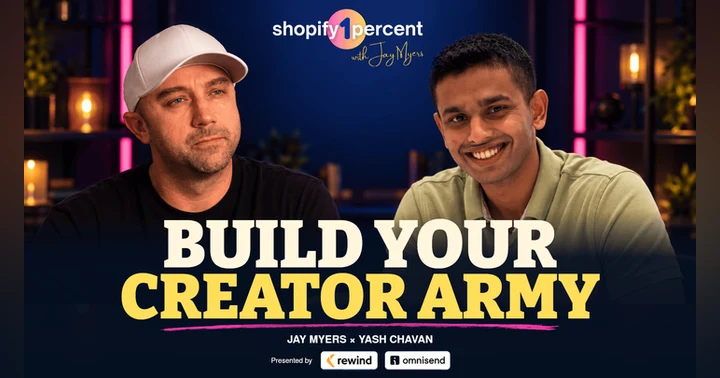
On this Shopify podcast, Yash Chavan of SATHI shows me why your influencer list matters as much as your email list. One Australian brand found a customer with 2.5M Instagram followers who’d ordered 11 times. Nobody there knew. We get into finding the creators already buying from your Shopify store, what commission to pay, and why most gifting boxes stall after one post.

 Apple Podcasts

 Spotify

 YouTube

 Amazon Music

 Audible
Key Takeaways
- On the Shopify1Percent podcast, Jay Myers talks with Yash Chavan, founder and CEO of SATHI and SARAL, about how Shopify brands can build an influencer list as deliberately as they build an email list, starting with their own customers.
- Yash Chavan of SATHI says 100 creators with 5,000 followers each can reach about as many people as 1 creator with 5 million, with maybe even more trust, so a smaller Shopify brand can start with 100 to 200 creators.
- Yash Chavan recommends tracking PPD, or posts per day, as a measure of awareness: count your brand's social mentions over the last 30 days and divide by 30, so 60 mentions in 30 days equals 2 PPD.
- Yash Chavan says the first place to look for influencers is your Shopify order history. One Australian brand using SATHI's Sherlock agent found a customer with 2.5 million Instagram followers who had ordered 11 times in the past year.
- Yash Chavan of SATHI recommends an affiliate commission between 10% and 25% for most Shopify brands, set by your unit economics and what you already pay to acquire a customer, with an attribution window of 14 to 30 days.
- Yash Chavan says creator partnership ads on Meta typically cost 15% to 25% less per acquisition than brand-run ads, and suggests paying creators a share of the revenue their ad content drives, such as 5%.
How do I find influencers for my Shopify store? Yash Chavan says start with the people who already bought from you. One Australian brand ran his Sherlock agent on its orders and found a customer with 2.5 million Instagram followers. She’d ordered 11 times in a year, and they had no idea. Yash, the founder and CEO of SATHI and SARAL, thinks Shopify brands should track an influencer list the way they track an email list. Every brand knows its email list size. Ask me how many influencers we have and I’d be guessing.
So if you’re asking yourself “how do I find influencers who already buy from my Shopify store?” or “what commission should I pay creators in my affiliate program?”, this episode is for you. Same goes if you’ve ever found out a celebrity was wearing your product because you happened to be scrolling at the right moment.
💡 KEY TAKE-AWAYS:
- How Yash turns “awareness” into a number he calls PPD, posts per day, and the simple math to measure yours.
- Why 100 creators with 5,000 followers can beat one creator with 5 million, and how to find the first dozen for your creator army without scrolling TikTok all night.
- The VIP move I’d make the day an influencer orders from you (Yash calls it seven-star support), long before anyone mentions an affiliate program.
- How to find creators who actually want affiliate deals, so you’re not stuck when they ask for a big cheque upfront.
- Why Yash says to pay some creators 5% of the revenue their ads drive, and the CPA drop he actually sees on partnership ads (lower than Meta’s number, still worth having).
- The commission range Yash says works, and why a $15 lipstick and a chair shouldn’t share an attribution window.
🛠️ RESOURCES & LINKS MENTIONED IN SHOW:
- SATHI: https://www.mysathi.io
- SATHI Sherlock: https://www.mysathi.io/feature/sherlock
- SATHI Match: https://www.mysathi.io/feature/match
- SATHI Inner Circle setup guide: https://help.mysathi.io/en/articles/35-how-to-set-up-inner-circle
- SARAL: https://www.getsaral.com
- Yash’s first Shopify1Percent episode: https://www.shopify1percent.com/sathi/
- Episode 91, building a creator and affiliate pipeline: https://www.shopify1percent.com/build-the-ultimate-affiliate-creator-pipeline-for-your-shopify-store/
- CreatorIQ State of Creator Marketing report: https://www.businesswire.com/news/home/20251001030782/en/Creator-Marketing-Enters-the-Era-of-Efficacy-Brands-Demand-Scalable-ROI-as-Creator-Budgets-Surge-171-CreatorIQ-Report-Finds
- Meta’s partnership ads research, as reported by PPC Land: https://ppc.land/meta-says-partnership-ads-cut-incremental-purchase-costs-45-in-emea-tests/
Yash’s offer for listeners: join the waitlist at https://www.mysathi.io with code JAY to jump the line and get a longer trial. And if you install SATHI, Omnisend or Rewind, email AirPods@Shopify1Percent.com to be in the running for a pair of AirPods 5. I give a pair away every month to a listener using one of the show’s partners.
⭐️ Support the amazing partners who make this possible 👇
🎁 Remember to email AirPods@Shopify1Percent.com and tell me if you install one to win a pair of the new AirPods 5
⭐️ SATHI ⭐️
This episode is brought to you by SATHI, the best affiliate platform built for Shopify brands.
70% of influencer-driven revenue isn't showing up in your dashboard. Codes are leaking. Affiliates are ghosting. And you're paying commissions on sales that never should've counted.
SATHI fixes all of it. Built by the incredible team behind SARAL (200+ top brands, $59M in revenue with influencers).
🎁 Our listeners get early access at MySATHI.io and use code JAY for 20% off
⭐️ REWIND ⭐️
The undo button for Shopify. I’ve watched merchants lose entire catalogs to one bad import or an app update... Shopify’s own terms make your store data your responsibility. Rewind backs up your products, themes, orders, and customers automatically, and restores one item, or your whole store in a couple of clicks.
In my opinion, if you're actually serious about your Shopify business, you absolutely should have Rewind running on it. There's no excuses not to have it backed up. Rewind is trusted by 25,000+ businesses including Olaplex and Dr. Martens. Set it up once and have peace of mind forever.
🚨 Our listeners get an extra full month of free FREE protection and backups: https://www.shopify1percent.com/rewind/
⭐️ OMNISEND ⭐️
I personally use Omnisend for email and SMS on every Shopify store I manage, and for this show too! I've tried them all, and it's hands down the best way to run every email and SMS automation and campaign you need, segment to personalize them, and A/B test everything to optimize conversion.
PLUS, you can now connect Omnisend to ChatGPT or Claude and just ask “where can my email and SMS be making more money?” It reads your actual store data and tells you, then builds the campaign for you right from the chat. It even writes in your brand's voice. Fifteen years doing this and it's the closest I've felt to having a full-time marketer sitting beside me. (Plus most merchants report paying about half the price of Klaviyo.)
🚨 Listeners (YOU) get an exclusive 30% OFF 3 MONTHS: http://shopify1percent.com/omnisend
Did you know leaving a ⭐️⭐️⭐️⭐️⭐️ review on Spotify, or Apple will give your shop gooood ecommerce karma? ❤️
Frequently Asked Questions
How do I find influencers for my Shopify store?
Yash Chavan of SATHI recommends starting with the influencers in your customer list, then reaching out to 100 to 200 new creators a week with free product and no strings attached. Creators who like the product become affiliates. In his experience, about 20% of affiliates drive 80% of sales, so he moves top sellers to a higher commission, such as 15% to 25%, and runs the best storytellers' content as partnership ads.
What does Yash Chavan recommend for building a creator army?
Yash Chavan of SATHI recommends starting with the influencers in your customer list, then reaching out to 100 to 200 new creators a week with free product and no strings attached. Creators who like the product become affiliates. In his experience, about 20% of affiliates drive 80% of sales, so he moves top sellers to a higher commission, such as 15% to 25%, and runs the best storytellers' content as partnership ads.
What is PPD (posts per day) in influencer marketing?
PPD stands for posts per day, a metric Yash Chavan of SATHI and SARAL uses to measure brand awareness. It counts how often customers, creators, partners or media mention your brand on social each day. To calculate it, take your mentions over 30 days from any social listening tool and divide by 30, so 60 mentions in 30 days is 2 PPD. Yash tracks it alongside the size of your influencer list.
What commission should I pay Shopify affiliates?
Most Shopify brands can run an affiliate program at a commission between 10% and 25%, according to Yash Chavan of SATHI. Single-digit commissions feel too low, and you rarely need 30% to 35%. To choose within the range, look at your unit economics and what you already pay to acquire a customer. If your average order is $100 and Facebook costs you $50 per customer, a 25% commission plus a 10% customer discount costs $35.
How long should a Shopify affiliate attribution window be?
Yash Chavan of SATHI says 14 to 30 days works for most brands, and SATHI's default is 14 days. Match the window to how long customers take to decide. For an impulse buy like a $15 lipstick, 5 days is enough. For a considered purchase like a chair, use 30 to 45 days. You can also pay different rates for new and returning customers, such as 20% for new and 10% for returning.
What should I say when reaching out to an influencer?
Offer something of value upfront and make it easy to say yes. Yash Chavan of SATHI recommends a short, personal email that compliments something specific the creator made, offers free product and says there are no strings attached. Don't ask for posts or commitments in the first message. Talk about commission only after they've tried the product and like it. He prefers email to DMs, which often land in message requests.
Are micro-influencers better than big influencers for Shopify brands?
For most Shopify brands, yes. Yash Chavan of SATHI says smaller creators can go deep into a niche, while creators with millions of followers have to appeal broadly, and people trust a local creator with 15,000 followers more than a celebrity. He says 100 creators with 5,000 followers can reach as many people as 1 creator with 5 million. HypeAuditor's 2026 report puts Instagram engagement at 1.78% for nano creators and 0.33% for accounts over 1 million.
How do creator partnership ads work on Meta?
A creator gives your brand an ad code from their Meta Business settings, and you run their existing post as an ad from your own Ads Manager, adding your link and call to action. Yash Chavan of SATHI recommends a separate campaign for creator ads and says they typically cost 15% to 25% less per acquisition than brand-run ads. SATHI requests the ad code in one click, and you can pay creators a share of the revenue their ads drive.
Jay Myers: Okay, so in episode 91, if if you go back and listen, I did a deep dive all about creating creator pipelines, affiliate pipelines for your store. And in that episode, I told you that it takes roughly 1,000 invitations to get 100 creators posting about your brand.
Now, I told you that episode I made those numbers up, but they're roughly directionally right. But one number that I didn't make up is in 2020, 71% of brands told Creator IQ, they did a study, that gifting and seeding was their top ROI driver. Now, by last year, 2025, that same 71% was down to 20%. Now, gifting didn't stop working.
Most brands just stop there, and that's the problem. They send the box, they get one post and that's it, and they never build any type of a pipeline, any type of content coming after. And the brands that keep going are the ones that end up with what I call a creator army. And Meta has a super interesting data point, but they sta- I'm gonna quote it here.
"Studies found that at least 30%-- when at least 30% of a campaign's ads were creator partnership ads, the median cost was 45% lower than business as usual." So I brought Yash back on here. He's on the front lines of this. He's watched hundreds of Shopify brands build these programs. He's got software that helps them with it.
We've had him on the show before. We-- on that one, we really dug into the fraud protection component of affiliate, which is a huge thing. Affiliate programs are, are susceptible to so much different types of fraud, and they're solving that. But today, I wanna focus on how to actually build an affiliate army with a steady, repeatable pipeline, with real with real people coming in on a regular basis.
So Yash, welcome back as a repeat guest.
Yash Chavan: Thank you, Jay, for having me on again. I think really excited and yeah, agree with all the sort of data that you mentioned to kick things off. That's exactly what we're seeing with some of our brands. And again, like happy to talk in depth, but yeah, I think great way to set the stage for what we'll talk today.
Jay Myers: Yeah, so I said in the, in episode 91 I believe this, I'm seeing this, I'm wondering if you're seeing the same thing too, that five years ago it was y- pay a lot of money to the influencer that had a million followers, try to get them signed, write a big check, get them to do one post, and then kinda hope and pray that people see it and convert.
But now it seems like the brands that are really winning aren't getting the mega influencers. They're getting a lot of smaller ones and like an army of them. Is that
Yash Chavan: Yeah. Cre- yeah, I mean, cr- c- creator armies is a thing, and I think it's just a natural consequence of people trusting people, right? I think everyone's been burnt by buying something off of an ad that didn't really meet your expectations or trusting the claims of a company and it wasn't really as good.
So I think it's just we just naturally see the saturation of ads hitting a certain point and even large sort of almost in some sense establishment influencers like somebody-- It's for lack of a better example, like no one's gonna trust like a Kim Kardashian with beauty advice. It's just that's just what it is.
But you're gonna trust sort of like the, influencer who is from your town, who has 15,000 followers, who kind of like cares about the things, same things that you care about. So it's just, I think, a natural consequence of that consumer behavior um, that we're at a place where now as brands it's almost as imperative to have a thousand true influencers in your community that are promoting you as it is to have an email list, for example.
So it's just having a list of people instead of having an email list where you have, obviously have an email list, but then also have a list of people, even like 100 to 200 people if you're a smaller up-and-coming brand who have reach in the millions cumulatively, right? So 'cause instead of working with one creator with 5 million followers, you could work with 100 creators with 5,000 followers and effectively get the same reach and maybe even more trust with that behind the same reach number.
So yeah, 100% seeing that.
Jay Myers: That's so interesting. S- I had a little bit of a light bulb moment there. If you ask any e-commerce brand, "What's your email list?" They'll always know. Like they'll say
Yash Chavan: Yeah.
Jay Myers: it's 20,000. It's 50,000," etc. Like they'll know what their email list is. Like I can think of what our email list is. But if you said, "What's your influencer list?"
I don't know.
Yash Chavan: Yeah.
Jay Myers: I mean, I could guess at it, but like it's not something that most brands say like, "Oh our influencer list is 150. It's 200." It's what, like it's not tracked.
Yash Chavan: Yeah. It-- And it should be like a KPI for the sort of the almost like the growth team to have to grow the number of influencers and especially to grow the number of active influencers who keep talking about you. Because one thing that we-- I know we've spoken about affiliate marketing a lot, but also on the flip side, what you also want as a brand is almost the opposite of affiliate traffic, because affiliate revenue is bottom of funnel, right?
That's almost a consequence of everything else that you do. You need like massive top of funnel in the sense that you need multiple creators talking about you just organically all the time. And that can be quantized into a simple metric I call PPD or posts per day, is how many posts is your brand getting per day?
Because awareness is like-- tends to be so woo-woo. It's like, what's awareness? Yeah, we wanna be-- we wanna get more awareness, but what does that mean? I think a good proxy for awareness is how many posts are you getting every day organically about your brand from customers, from influencers, from partners, like whoever, or from media outlets, like just in general.
PPD is a good metric. So if you're getting five posts per day as opposed to one post per day, there's five times as much awareness in the market about you as before. So that's how I would also measure it and make it a KPI in the sense of, okay, size of influencer list and PPD from that list.
Because you may have a big list, but if no one's mentioning you, it doesn't matter. Yeah.
Jay Myers: Well, okay, so I got two questions on this one. How do you track that?
Yash Chavan: You track-- I mean, s- sorry to like pitch right away, but you track it inside of Saral and SATHI. So we all of... So we have a social listening engine, for example. Or so in general, so yeah, we do it too at, at Saral, but any sort of social listening tool you can track the number of mentions that you get.
And we actually explicitly, I'd like to say we almost invented this metric. I haven't seen it anywhere else before. So we actually directly show you PPD. But y- if you can use any social listening tool and just, okay, over the last 30 days, we got mentioned 60 times. All right, that's two PPD. Yeah.
Jay Myers: Oh, interesting. Okay. I actually didn't know that that's in Surul, not SATHI, right?
Yash Chavan: That's in Sorrel and very-- coming very soon in SATHI. Yeah.
Jay Myers: Okay. Oh, so you'll be able to do it in either one. That's amazing. And so you don't have to worry about tracking and w- across, is that on like TikTok, Instagram?
Yash Chavan: Instagram and TikTok for now, YouTube coming very soon. Working on an approval. Yeah.
Jay Myers: Amazing. Okay, so that was my first question. And then now you mentioned that yeah, having 200 creators like n- in your system is great, but if they're not actually posting... Also, actually, I think, I can't remember if it was before air or s- before we started recording, we talked, I had a post about, about that episode 91, and when I was doing a bit of research for that post, I was blown away by the difference in engagement of the mega-influencers versus the micro-influencers.
And I wasn't... Oh I always knew that micro-influencers are better. You're right, you're bang on. If I see s- Kim Kardashian post about something, well, I know she's probably not in my wheelhouse of influence, but if my wife did or someone, I just, I don't know. It doesn't-- I don't relate with her, I don't connect with, and I'm not so, so it's probably not gonna influence me.
But if I see another... Like I get these like dad posts and it's literally like me. It's like hockey dad posts and, and and they don't even have a lot of followers at all, but I've bought products and... So anyways, the, the numbers, I'm going off the top of my head, but it was like five times more engagement on micro-influencers, which is people with less than 10,000 followers.
And even, even lower, like sometimes 1,000. Five times more engagement than the mega-influencers
Yash Chavan: Yes. And I, like you nailed it. It's just trust and familiarity. Naturally as-- If you think about it almost in, in, in cr- I mean, they call it creator economy, so we can think of them as businesses. If you think of creators as businesses any large creator, let's say you have one million followers, right?
You have a very large dam for your business, right? You've acquired a lot of customers or viewers. Naturally, you have to be just broader in sort of how you appeal, right? There's only so many, like you said hockey boy dads, right? Like for instance, right? But there's way too many people who care about beauty, right?
Like that dam is huge. So if you n- if you're big as a creator, you're naturally at the limits of how deep you can go with someone, right? So yeah. So it's, I think it's just like smaller the creator, the better, just from that like fundamental dynamic of they can just be super niche in their content.
And sometimes the niches are like big, right? Fishing as a niche is like something that's such a-- It's a nice hobby and it seems a little bit on the fringe, but hey, that's a big... Like there's YouTubers with five million followers who just talk about fishing, right? So you can be-- There's instances where you can be niche and broad, but as soon as you start going broader and hitting those sort of okay, I've got five, 10 million followers, you're almost hitting that celebrity territory where you're almost not known for a certain sort of niche, but just for being an influencer almost.
So yeah.
Jay Myers: Is it more important than ever, or is it less important because everyone's doing it and everyone feels like, oh, the social media's just crowded with every- everyone's an influencer now? Or is it more important than ever because people aren't finding you through search and, and stuff? What which...
Is influencer marketing becoming-- Like, which way is it going?
Yash Chavan: Yeah. I think I would just draw, if you look at it from a fundamental, like, marketing lens, there's paid media, right? And everyone talks about paid media. And like there's more advertisers. And I was look- reading a stat the other day there's more advertisers there's more brands on Shopify right now than there were advertisers on Facebook 10 years ago.
So just like there's so mu- there's so much and there's like, people are spending more and more on paid media all the time. So, and I look at influencers almost as somewhere in the middle of earned and owned media, depending on what the type of the influencer and the relationship is. If you have that sort of influencer list, influencer army, that's like owned media, right?
And that's always worth investing in because that is yours to own, right? Tomorrow, if you turn off your Facebook ads how much growth are you gonna drive? Is the level of awareness in the market gonna be the same as before? Things like that, that matters, and that's almost like a, that's an asset to have as a brand compared to "Hey, we spend 100K a month on, on Meta," right?
So, yeah.
Jay Myers: I, my opinion, and I'm not as much in the space as-- I, I think it's more important than ever because a lot of the brands I talk to like search is drastically down because people aren't clicking on search results anymore. And actually Google put out a study recently. This was a couple months ago, so it's probably even higher now.
I guarantee it's higher, but 61% of searches in Google don't end up in a click anymore. They just read the AI insights or the overviews, and that's probably way higher. Like I actually can't think of the last time I clicked on a search result on Google. Like it's always the very, very few. And then if you're not one of the, one of the products that AI recommends, like you're almost invisible.
Yash Chavan: Yeah. It's-- Yeah, and it's the new SEO, right? So it's like-- 'Cause all the LLMs read the captions on Instagram. Gemini can reference stuff that is said, spoken in a YouTube video, right? So all that's just-- So if you're not being mentioned on socials, especially on Instagram and TikTok and YouTube, like the top three that are indexed by these LLMs, I think you're, you're lagging behind, definitely.
I think there's still obviously value in SEO and having a blog that ranks 'cause it's kinda still correlated with your AEO and do you show up in the summary or not? But I think it's also greenfield, right? If you get-- Hypothetically, if you get 100 YouTubers to post about you next quarter you're gonna start ranking in Gemini, like without a doubt, right?
But that's very hard to do s- it's very hard to do like something and get ranked on like Google first page top result. It's very hard to do. That's gonna take 12 months of intense sort of SEO hacking 'cause that's such a red ocean. But AEO right now is sort of like early days of SEO. Like ba- I mean, you know this, like 15 years ago you could publish a blog, get a few backlinks, okay, you're on page one of Google, right?
Like that's, that no longer exists. But I think we're in that phase for AEO, and that just makes sense to work with creators and influencers on all these platforms so you also have some of these other... Beyond the affiliate revenue and the awareness and blah, blah, blah, you have-- You're getting referenced on AEO now.
You're getting picked up on retail more, or your ads are actually being clicked on more often. You have all of these sort of side effects, or as I like to call it, the halo effect of building this creator army.
Jay Myers: And if you if you Google anything, you type it into Google, say I don't know, "How do I clean, how do I clean a frying pan with food stuck on it?" Or something like that, anything. You'll get the AI overview, and it'll have multiple videos embedded in there, and the steps to do it, it'll say, I-- Like, "I found this.
Step one, soak it for at least two hours. Put vinegar in it," or, I don't know, oil or s- something, whatever it is, and the steps. And then there'll be a video, and it'll link to the spot in the video where the person talks about that, and the steps that, that Google is outlining is from that video. So it's not just Gemini.
Y- a lot of people maybe don't use Gemini, and that's fine, but it's in Google too. It's right in, in there,
Yash Chavan: In embedded.
Jay Myers: embedded. So, I, I-- To-- When I see stuff like that, I think, man, whatever you sell, what are the 20 different ways it can be used? Pick a product. Pick a... Let's say on the frying pan.
I wasn't plan- I wasn't planning on using this analogy, but the frying pan might be used f- when I'm camping. I-- Maybe it's a frying pan that I can put on a barbecue. It's a barbecue sa- Maybe it's, it's it's non-stick, and that's a good thing. Or maybe it's super, I don't know, something easy to clean or light.
It's a li- it's lighter than anyone whatever. But getting people to talk about it from different angles and intentionally finding different types of influencers, 'cause then what happens in those videos just naturally is as they're talking about it, they're actually answering questions people type into AI that you might not even think of to have on your product page, with 100 FAQs on your product page, it's gonna surface out there.
Which is just another reason it's so much more valuable than it ever was
Yash Chavan: Yes, totally agreed.
Jay Myers: So, how do you,
Yash Chavan: to add to that. Yeah, 100%. I think you should have all these influencers talking about you 'cause it has all these all these benefits. And yes, like ideally also diversity matters, like you said. So maybe add-- little bit to add to your point is yes, don't just get your typical ICP to talk about you.
Also get the different use cases. Yeah, this is sort of like a non-stick frying pan that a lot of people who are home chefs really love. But you know what? It's actually also really lightweight and people who go camping also like to carry it in their backpack 'cause it's not super heavy.
That's a great angle, right? So all the angles that you can splice and dice with how you pitch and offer your product, you should work with all those types of influencers 'cause... And I guess like we'll talk about this eventually, but like even Meta if you wanna boost it as ads will reward that.
So yeah.
Jay Myers: I think the biggest challenge that most brands face is they go, "Yeah, okay. Okay, Jay, I know I need lots of influencers." Shut up already. That's how do I get them is the biggest challenge 'cause I think, yes there's product seeding, you can reach out, you can scroll Instagram all night long and try to find people.
You can post on your site. I don't know, just like I know, and don't worry, it's okay to talk about your, what you've built 'cause that's, that's it's super helpful for this, I know that. But what is the-- Well, t-tell me about the tools that you've built to solve this, first of
Yash Chavan: Yeah. Yeah. So influencer discovery is a sort of like a massive gap right now 'cause like you said, most brands, they would just say, "Oh, I wanna..." Yeah, they listen to Jay Myers and Yash talk about, "Hey yeah, get influencers," and they're just like on TikTok all day trying to DM people, and that usually lands on deaf ears.
So how do you sort of go and build this army? How do you get to that first, say, even like a dozen or so people in your community? I think honestly the answer is sort of, it's just hidden. It's-- I don't know if you've read this book called "The Alchemist," but he goes around the world. Like the boy effectively, like the crux of that book is the boy sort of like goes around the world to find this treasure only to find out that it was in his backyard all, all this while.
And so I think that's just e-comm brands with influencers is like you don't have to go anywhere else, just look at your customer list. So one of the tools that we've built, for example, is this agent called Sherlock. And what Sherlock does is Sherlock would de-anonymize your order data and show you if an influencer with 15,000 followers purchased from you yesterday or a celebrity with 5 million followers is like a customer, is like a repeat customer or something like that.
Just two days ago I was on a call with this Australian brand and they found somebody with 2.5 mil Instagram followers
Jay Myers: who ordered from them
Yash Chavan: 11 times over the last year. So-- And they had-- They would've never known that she w- was a customer. And then they have her email, they have-- Obviously when you go to her Instagram it says for business inquiries contact, and it's like an agency.
But the brand, this person's a loyal customer, bought over 11 times in the last 12 months. You have her phone number, give her a ring, send her a text figure something out. So I think that's one of the best places to start is your customer list and obviously if you have a tool like ours that helps.
But another way to do is like another way we help turn your customers into partners is you can have an embed, we call it inner circle, is you can create an inner circle purely from your customer base. So on the check-- On the thank you page on Shopify you can embed a pop-up that says, "Hey, thank you for your purchase.
Do you wanna partner with us to earn 10% commissions or something?" A refer-a-friend program almost.
Jay Myers: Yeah. But just a steady, just to get a steady flow of people signing up
Yash Chavan: Yeah. And that's gonna have a lot of customers, but that's also gonna have some influencers who in there who have, five, 10K followers and those sound like small numbers but if you're doing decent enough order volume at scale if you get even like, even 50 people at 10,000 followers that, that's a large-- That's 500K
Jay Myers: But I think we've all seen it though, like on, on TikTok and Instagram, sometimes I'll see a post and it's kind of going viral. Like there was this guy recently from a taco store in Hawaii. I don't know if you've seen any of it in-- all over my feed. Okay. And he's-- the guy's awesome. He's hilarious.
He's super funny. He's he's a Hawaiian guy and he's like, "Well, we can't afford an influencer, so I have to be my own influencer. So it's like day one of being my own influencer." And he like talks make... You know how like all like the young influencers talk about everything, but it's super funny 'cause he's like a 40-year-old guy talking about tacos.
And I-- and there's like millions of, of likes and tons of engagement. When I went to look at his profile, he actually had a couple thousand followers. So he, he-- just the algorithm picked it up. People started liking it. So it doesn't matter even if he had 100 followers, if people start sending it to a friend 'cause it was-- I sent it to my wife 'cause it was so funny.
So yeah. Like I think... it's funny, I-- what-- when you talked about Sherlock, the first thing that comes to my mind is I can't count how many times I've heard a brand talking about their how they became successful and they'll say something like this. They were like, things were going pretty good.
We were selling and then one day I saw this celebrity wearing our shoes or wearing my gloves and I just happened to be scrolling and I saw this person wearing that." And that-- it should never be that you happen to see someone. It should-- like you should have known like the day that person bought it, and that's what Sherlock solves.
Yash Chavan: That's exactly what Sherlock solves. Yeah. And it's so powerful. I mean, we've seen some brands that were like, "Oh, I had no idea we had all these..." We worked-- we installed it for a big brand recently, and they found, I think some insane, like over 1,000 influencers in their order network. Right?
And that was the de- and the default scan it runs is for three months, and you can make it go longer. In the last three months, they had some 100,000 and something on top, like 1,000 and some change on top, like influencers who've ordered. It's like, that's massive. It's just oh, you have your influencer list there.
You don't have to scroll TikTok at all. And importantly, you don't even have to send them free product, 'cause t- technically if it's a new influencer,
Jay Myers: already bought from
Yash Chavan: seed them. Like they, they have the product. Like just reach out to them, work with them. Yeah. So
Jay Myers: so what do you get? You get a report of everyone's social account and follower account? Or is
Yash Chavan: Correct. So yeah, just, yeah, just runs a scan the first time you install it. Runs a scan, shows you, hey, there's 200 influencers who've purchased from you over the last three months. And then it obviously has filters. So hey, only show me people above 10,000 followers. Let's say you don't want to work with anybody smaller.
Only show me people on Instagram, 'cause that's where most of my audience is. And you can narrow it down, and then in one click you can invite everyone. And the great thing is also we, again, like Sherlock, will write a personal invite to all of them. So it'll say something. It'll actually go look at their let's say go watch the reels that they've posted and say something like, "Hey, I saw that you went camping the other day.
That's awesome. We have this frying pan brand," obviously blah, blah, blah, and then reach out to them. So yeah.
Jay Myers: And how does it, what does it DM them or is it, I guess you have their email
Yash Chavan: You ha-- Yeah, if you have their email, so it's best to just email them 'cause that also stands out. DMs sometimes get
Jay Myers: It's noisy
Yash Chavan: it's, yeah, it's noisy and it, especially, I mean, on TikTok you can't DM anyone who you don't follow or who doesn't follow you back. Basically, like you have to be a mutual. On Instagram, even if you can DM, but you can only send one message and it goes in requests.
And they have to click on requests and then go through the requests and only then do they ever see it. So it's harder to get discovered on or seen on, if you think about just open rates. Emails are great. So yeah.
Jay Myers: What kind of messaging works best when you're reaching out to these people? Like I can, like for the podcast, it's funny I don't consider myself an influencer, but I guess I am in the e-commerce world because I get three to five emails a day. I just had someone email me yesterday.
They're like, "Hey, can we send you this chair that you use when you're recording?" And I- it's like a $3,000 chair, and, "And we'll pay you to use this chair when you record podcasts." I'm like, "Okay, sure. Send me the chair." It's, I don't usually... That's not... But,
Yash Chavan: Yeah
Jay Myers: I honestly, like I, I usually just ignore a lot of the emails 'cause a lot of them are, there's they're not a good fit.
If it's not something that would actually help our audience, I won't even, I won't even entertain it. Like it has to be, So when you're reaching out to these influencers, how do you get them to reply and to be interested?
Yash Chavan: Yeah. I mean, if they're customers, you're-- it's easy mode, right? So, and that should be the first. You don't want to play a game that's harder than it, it should be, right? So first thing, reach out to customers. I think that's easy. But if you want to reach out to just like cold influencers I would say, so I would just, I mean, the-- some of the basics, right?
"Hey," reach out with some value upfront that nobody else can offer. Typically, that's a free product. And then make it a no-brainer to say yes. Don't ask for too much in the first email. So ba- something like as easy or as simple as, "Hey, can..." Kind of what they did with you is like, "Hey, love your show," write a personal compliment, "Saw the episode you did with YaSha, it was awesome.
Looks like you have a chair, but we've got this amazing chair that's ergonomic and it's built for podcasters who sit and record for a long time. Maybe you do X number of podcasts every week. Can we send you one?" Question mark. "And if you like it, you can talk about it. If not, no strings attached.
Don't worry about it." That's such an easy yes. It's like like you said, "Yeah, sure," send me the chair," 'cause you don't have anything to lose, and there's no obligation. There's no sort of sense of, "Oh, we'll send you this chair and you have to mention us X number of times every podcast," or nothing like that.
So I think that's a good sort of framework is offer free product or some value upfront. Don't ask for too much. Make it easy to say yes, so you kick off that relationship. And then from there, obviously, if they don't like your product, you also don't want to work with them 'cause they might say bad things or it's not gonna come off as authentic.
It's gonna come off as a, as an ad read, and that's what you want to avoid. You want it to feel like a trusted recommendation. Right? So I think first get-- send them your product, see if they like it. If they like it, discuss commercials, the how do you want to work together, things like that.
Jay Myers: Question for you. Okay, so Sherlock, you run it kind of as a batch. It doesn't run on every single order you initiate it, correct?
Yash Chavan: It, it does. So it runs on-- So when you first install it, it runs for the first time and like scans your last three months, and then it runs proactively every 100 orders you get. So every 100 orders it'll run. Right. So that's kinda how it works. And then if there's something, it'll proactively flag, give you a notification, write the emails, send it to them.
Yeah.
Jay Myers: So here's where my mind goes. When someone-- When gener- often what an influencer talks about when they're talking about a product is how amazing the company is, how awesome it was to deal with them, how great their support is, s- stuff like that, right? Now, one of the things if someone buys from you and they just get that product, and if I reach out to them right away they might have never emailed our support team.
They might have never had any issues, so they don't even know if you have an amazing support team. So two things come to my mind is if I could identify influencers I mean, obviously you wanna give everyone amazing support, but call them VIPs. And when you can i- if you can identify these people, and if I see that Yash ordered from me, he's got 10,000 followers on TikTok, might want to have a Slack channel or something that flags a VIP, and then I have a personal reach out or I have someone on my support team call and say, "Hey, Yash, I saw you.
I just wanted to... I call every few people. I don't call everyone, but I saw you ordered our chair. Just wondering if you got it. Was it, were you able to set it up? Did you have any questions? Do you wanna, do you have any questions about how you clean it and treat it? Here's, h- this is my direct email, so you don't have to worry about support," or something like this.
You just don't say anything about the affiliate program. You just, just give a little extra support, and then you make a note to 30 days later, the founder or someone else, maybe some, no, someone on the affiliate team reach out and say, "Hey, Yash, I I'm John from this company. I'm actually from our affiliate team, and I noticed you're quite active on TikTok.
How are things going with the chair?" And then you would say, "Oh my gosh, I had the best experience. Someone from your support team called me. Love it. Be- would be happy to." So like just preempting it a little bit with some, what's the, greasing the wheels,
Yash Chavan: yeah, yeah, 100%. And it's the same, it's the same framework of offering value upfront that you wouldn't otherwise necessarily, right? Yeah, everyone else gets, say, five-star support, but somebody like a VIP should get seven-star support, so that's what, that's what I would do. And this is a great-- You're so good with these product ideas, by the way.
I think you gave me like two, three when we met. But this is-- I mean, maybe we should consider an integration with one of these CX platforms like
Richpanel or
Jay Myers: To flag it. Even just connecting with Slack, like a simple thing to notify it. Because you want-- you... People people re- people review and people talk about experiences and people, they don't necessarily talk about a brand as much. If I've, if I fly on an airline, I will never like post, "Oh my gosh, Delta Airlines, those planes are amazing."
But if I have an amazing experience with a flight attendant who went out of their way, who did something amazing, I might post, I just gotta say, Delta went above and beyond." It's actually not Delta, it's the person.
Yash Chavan: the person.
Jay Myers: It's the person. And yeah, and they wouldn't they maybe don't know that I'm an influencer sitting on their plane, and if they, I fell asleep and they snuck a pillow behind my head or something,
Yash Chavan: Yeah.
Jay Myers: stuff like that.
And so if you can identify it and get ahead of it, I think there's a huge opportunity
Yash Chavan: Yeah, tremendous. Agreed. I think like treating your influencer customers giving them a little bit extra special treatment would go a long way when you actually reach out to them for some sort of a collab. So yeah.
Jay Myers: Yeah. 'Cause this, I mean, heaven forbid something did go wrong, like maybe the, the pan was a little bit not as stick-free as, as you thought or whatever, and now you're asking them to be an influencer. They're like, "Whoa, I actually, I got a issue I gotta deal with first." So like at least you've opened a window for them to deal with that before your head- your influencer marketing lead reaches out with the email, right?
So,
Yash Chavan: Co-correct. Yes
Jay Myers: so, okay. So, the pipeline, like getting people, like using Inner Circle, the em- em- the embed on the thank you page, no-brainer. Sherlock to find existing. What if you don't have enough customers coming in to find an army? What else what can you do? Like maybe I find I've got 12 good people in my customer base
Yash Chavan: Yeah. Yeah, dude, yeah. This is like we literally were having this exact discussion probably a couple months back with like my product team, and I'm like what if they just..." 'Cause we built Sherlock and we built Inner Circle, and it's like, but hey, like what if it's a new brand? What if they get only like a dozen orders every week?
How do they-- And especially now, I think it's so imperative that even smaller brands, typically what we've seen so far is once your, your brand gets to a certain stage where you're doing like five mil GMV, you've scaled your Facebook ads, now you wanna look at a secondary sort of channel, is when they think about it.
Increasingly now we're seeing a lot of smaller/younger brands coming in and saying, "Hey, we want to be intentional. We actually want to build a influencer list while we build up our email list," so, that was like a question exactly what you asked me. I'm like, "Let's brainstorm this. What would be a mind-blowing experience for somebody who does not have influencers?"
So what we came up with was we built this, another agent called Match. And what Match, as kind of going, going by the name, it is an agent that understands your Shopify store, your brand, your product, your USPs, and matches you with influencers who want to be affiliates. So there's two things there.
One, it's finding brand-fit influencers, and two, because we have a lot of data on the Cerule side, it'll match you with people who actually are open to affiliate deals, because the-- one of the downsides of even scrolling TikTok or messaging people or emailing people is they might ask for payment upfront, and then you're kind of stuck 'cause maybe you don't have budget, you're an up-and-coming brand.
How do you find influencers who want to be affiliates? That's Match. So literally right now you could go on the App Store, install SATHI, go to Match. Match has like pre-analyzed your brand and it'll show you hundreds of potential influencer affiliates that are tailor-made for your brand or tailor like hand-selected or like AI hand-selected for for your company.
Jay Myers: Hey, you must
Yash Chavan: like really powerful. Yeah.
Jay Myers: must have an awesome database of, and just growing and growing. Like every time someone, one store signs up 50 affiliates, because people aren't affiliates just for one product. And what like the average of, if you're actually active on social, you might be for 20 product.
Like people use shampoo, but they also use backpacks, and they might post about both.
Yash Chavan: Yeah
Jay Myers: so then you're connecting... so what does that look like? So if I'm a store, I use Match, it finds me like 50 potential good affiliates
Yash Chavan: Yeah
Jay Myers: who are open to affiliate programs, first of
Yash Chavan: Correct. Mm-hmm.
Jay Myers: are in the same
Yash Chavan: and post about the stuff that-- 'cause you might have an influencer who's like as a, as like somebody who's selling frying pans, you don't wanna necessarily go find influencers who are affiliates for makeup companies, right? So there's that. Or you don't wanna find big cooking chef influencers who are gonna take a lot of money.
So you want people in your niche who are open to being affiliates. And that's one of the most unique things that we've accomplished with Match, is not only does it find you people who are talking about the stuff that your consumers want to consume on socials, but also they have an openness towards affiliate deals because we have that data from their profile that they're affiliates for other brands, for instance.
So yeah.
Jay Myers: And can Match find contact details for these people too to, or
Yash Chavan: So say, yeah, just like Sherlock. So we'll find the contact details and then you can, from the platform, hit invite to literally hundreds of potential affiliates in one click. So imagine this, you listen to this podcast, you go to the App Store, you install SATHI, you click on Match. It has like hundreds of potential affiliates.
You maybe select like a couple dozen of them that are your favorites, hit one button, and Match would write a personal tailored invite to every single one of them and send them an email saying, "Hey I am Jay from this brand. This is what we do. We want to invite you to our affiliate program.
Would you be interested? Click here to join." If they click here to join, they're now affiliates on your program. So as simple as that, literally. So we're literally like making it very simple to find new affiliates.
Jay Myers: Yeah. Does SATHI have any... can affiliates who are being y- if brands use SATHI, can they see other potential programs that they could join or use? Is there like a marketplace
Yash Chavan: a-- Not, yeah, not right now. And there's a reason for that is because one, we wanna avoid a little bit sort of like competitive dynamics within our own customer set. 'Cause there's other platforms that do that and then it's yeah, there's like-- It's great for the affiliates who it's like, "Hey, you're currently on this brands program that's paying you 15%.
By the way, there's three more brands that are paying 25%." It's just like naturally gonna reduce affiliate activity and like it, it's gonna just gonna concentrate with the people who can pay the most to affiliates. What we
Jay Myers: you just worked so hard to get an affiliate who was your customer, and now they might just leave for 5% more. Yeah
Yash Chavan: Yeah. Yeah. So that's why we avoid that.
But yeah we mimic some of those dynamics, for instance, with Match
Jay Myers: with the direct communication
Yash Chavan: yeah, we're letting brands choose their affiliates as opposed to affiliates opting into brands. Now, if it's non-competitive it's less it affects less. For example a, a brand that's, let's say frying pan brand and like chair brand, right?
Non-competitive at all. But now imagine the chair brand is offering higher commissions and because the chair is expensive, the dollar value of the commission's also much, much higher. And if it's the same person, they only have so many posts that they do every week or every month. Naturally, there's gonna be some inclination to post more about the product that pays you more.
So we tend to avoid that, yeah.
Jay Myers: Okay, I want you to think of the best brands using SATHI. So thinking about the ones that are like, "This is my poster child for like they're crushing it." What's the playbook? What are they doing? How are they... Yeah, what's their playbook?
Yash Chavan: Playbook is almost very simple, not easy, right? So playbook looks something like start by obviously there's like customers and do that customer influencer program. But you're gonna achieve real scale through cold reach outs to new influencers, right? 'Cause you only have so many customers and not all influencers are gonna be in your customer base.
So that's a great starting point. You gotta grow beyond that. So some of our like poster child brands would reach out to almost on a weekly basis to say 100 new people or 200 new people. Reach out to them, offer, do the same sort of value that we discussed. "Hey, we wanna send you free product, no strings attached.
Let's talk working together if you like it." If they like it, they turn them into affiliates. Now that they're affiliates, they keep running the affiliate program and then they're like, oh. Typically, and most brands would see this, is there's almost like a 80/20 where the top 20% affiliates are gonna drive 80% of the sales and 80% of the views, and it's almost separate groups of people the people who drive sales, the people who drive views.
So you then take the people who drive sales and you give them a higher affiliate commission. "Hey, you were on 15%, now you're on the special commission, you're on the 25%." So you incentivize the high performers more on the affiliate side. On the view side, they're still important even though they're not driving sales 'cause they're driving the top of funnel, generally tend to be better creatives than the affiliate affiliates.
'Cause the affiliates are like selling. The creatives are almost storytelling about the, your brand. And you can see where I'm going with this, is you take those creatives and run them on Meta and capture the conversion through Meta or TikTok. Right? So you can then, like you said if one third of your ads are partnership ads, your on-platform Meta CPA would be much, much lower.
Typically, on average, like I, I know Meta kinda says it's more, but generally speaking, to be realistic, we are seeing anywhere between 15 to 25% reduction in partnership ad CPAs compared to just regular brand run ads. Which
Jay Myers: that one
Yash Chavan: pretty significant.
Jay Myers: yeah, that one study that I quoted in the beginning, I th- was it 45%
Than the average brand-created ad when that... So how do you do that? So with creators, if they post something, you need to ask them to-- They need an, an account that can be an, a partnership account, or if they add you as a collaborator, or like what is the steps for a brand to do that?
Yash Chavan: it's super complicated. So you have to ask the creator to go to their Meta Business Manager, which most of them don't know what-- where that is or how that looks like 'cause they, they like, like to make content. They're not in the ads manager or business manager as much as we are as brand operators.
You-- they gotta go to their Meta Business, and they need to go a few screens deep click here, and then they get this thing called the ad code. They take that ad code, they give you that ad code, and it's almost-- think of it like almost like an API key. It's like, okay, if I add that ad code, I can now run ads through the creator's account.
With that said, what we've built eliminates that whole friction. In one click you can send the creator a notification. They get a notif on their Instagram. They hit yes, approve and then we do all of the technical legwork of actually going through their Meta Business, taking the ad code programmatically and sending it to the brand's
Jay Myers: Oh, amazing
Yash Chavan: and then literally in one click, you can just get the rights to run ads through their content through
Jay Myers: then as a brand, does the brand upload the video to their Meta account and push it through the creators? Or does the video already live in the creator's account and I say, "I wanna put ad spend behind," and I select the post?
Yash Chavan: latter. Yeah. So you select the post and you're like, "Hey, I wanna take this post and I wanna put it in, say, this ad set." And it will kind of run. And generally, in terms of just like account structure on meta ads, we recommend having a separate campaign and a separate ad sets for
Jay Myers: country, regions, targeting, budget it'll
Yash Chavan: all on meta. Yeah. And then send it to that ad set, for example. And then just take the budget, whatever that is, or you can set up a budget. And importantly, here's the kicker, right? So you can now through a platform like ours or in general as a strategy incentivize the creator by paying them not upfront for the rights, but a percentage of ad spend or a percentage of GMV that comes from that ad.
And what that means is you're almost-- it's almost affiliate, but on a creative level in the sense that it's almost how you would compensate a creative director, like in a traditional team. It's like, "Hey, if your creatives drive $1 million, we'll give you 10% of that," right? It's the same thing with these sort of mini creative directors that you have.
It's like, "Hey, we'll give you 5% of all the revenue that comes from this creative." Now they're thinking, "How do I make this the best ad possible?"
Jay Myers: How do I make the best content? Totally
Yash Chavan: And they keep posting, and then like out of 10, one is like a great winner and you make a lot of money and they make a lot of money, right?
So
Jay Myers: When you bring that post into your ad group in Meta, you can then add a link or like with a learn more or whatever to direct it. If they don't have a link on that post or something,
Yash Chavan: Yes.
Jay Myers: can add a call to
Yash Chavan: can-- Correct. Yes. So in the interface, it's basically like creating a, a n- any other meta ad. So the only thing that
Jay Myers: down at the bottom there you put the URL
Yash Chavan: So you put the URL, the UTM e- all of the, the CDA, all of that is just custom. And then you boost, and then it runs the ad, and then whatever GMV comes in, we track that.
We can also give a percentage of that to the creator if you so choose,
Jay Myers: And that percentage to the creator, Meta doesn't track that, but with SATHI I can-- you can see that this creator's post... So SATHI can still see it when it's an ad through Meta?
Yash Chavan: Correct.
Jay Myers: Oh, okay.
Yash Chavan: Yeah. So we-- 'cause we integrate with the Meta Ads Manager. So we'll have access to how much that ad performed on Meta, and then we'll see, okay, like this ad has-- like in, in the last month, this ad has done $50,000 in sales. Okay, perfect. You've set up a 5% commission. All right, we'll pay the creator 250 bucks or whatever that is.
So yeah.
Jay Myers: Yeah. Well, and the way the ad shows, it's the account holder, like the pr- the creator, it shows their handle, right? Like someone can actually click through and go to their profile,
Yash Chavan: Correct.
Jay Myers: and somewhere it says sponsored and then there, there's a call to
Yash Chavan: says, yeah, it says like sort of, there's multiple ways to run this. You can run it as a almost what's like a typical partnership ad, which where it will say Gymshark and Jim Myers, or like it, it'll just say both. Or it'll say just Jim Myers, and that's what you would-- It's a slight difference, but that's what you would call like a pure whitelisted ad in the sense that it's purely like a dark ad.
You don't know what the brand is. That's the account behind that ad. You just see the creator. Yeah.
Jay Myers: And like there's-- I would think as a creator there's benefit. Like I would be excited about that, A, because there's potential of making money if my-- But also if someone said, "Hey, if you create good content we're gonna put $10,000 of ad spend behind your post," then I would think, oh, that's gonna actually help my profile get more traffic and followers as well too, right?
That-
Yash Chavan: 100%. So that's also like kind of the side effect of for creators, which is also one of the reasons why they're open to doing it is because, oh yeah my profile can now default on Instagram it re- it reaches maybe 50,000 people every time I post, 'cause that's the average views.
But now if you put 10K in spend behind it, it's gonna reach 500,000 people, and then a percentage of them are gonna not buy from the brand, but just click through 'cause they like the content and then give me a follow. So we do see the creator's followings go up. So it's a nice sort of win-win 'cause the brand sees a lower CPA.
And let's say for example, if you're reducing your CPA by worst case, I don't know, like 10%, right? It just makes sense to give 3% or 5% of that back to the creator and you're still lowering your CPAs by 5%, right? So yeah.
Jay Myers: see, it's like my takeaway from that is I would just make sure that you let creators know that you're doing that. If I reach out to a creator and I say, "Hey, we have an affiliate program and we give 20%," that's one thing. But if I say, "We have an affiliate program, we give 20% and we put $50,000 of ad spend a month behind our creators," even if it's 1,000, whatever.
Your competitor might not be doing that, or they might just not even mention it, and as a creator, I wanna go where I know they're putting some muscle behind my posts and that's a huge huge win, and it just might not be being said
Yash Chavan: Yeah, all the smart creators are doing that. And yeah, you're right. Brands need to do a better job of communicating this. One of the best ways to also communicate this is on the sort of landing page for your affiliates. So typically, we would recommend having some sort of a brandname.com/ambassadors or /partnerships, something like that.
And you should actually just describe your program as, "Hey we have affiliates. We have a 10%, 15%, 20% sort of tiering. So like default, special, VIP. And some of our best performing creators we put, we put 50K in spend every month behind our creators. Also, FYI, here's some social proof of the, some of our top creators," right?
And it's kind of like a feed embedded in there. So yeah.
Jay Myers: If someone's listening and they don't really know what a good budget or commission rate is, like if they reach out to a creator and say, "Hey we saw you posted. We wanna, we wanna work with you, and we have the..." And the creator says, "Well, what do you pay? What's your comm-" They-- And you wanna make sure that you're, like, in line with the market.
What should You be paying a percentage of ad spend or commission, and what percentage should your affiliate fees be? And, like, where's, like, where do you wanna be if you're in the right place?
Yash Chavan: Yeah, so general thumb rule, somewhere between a 10 and a 25% commission is good. You can make a program work in that. Typically, you don't need to do a 30, 35% commission, and anything below 10, like single-digit commissions, is just like that's too little. It also just feels low if you're-- It feels odd if you're giving like a 7% commission or something like that, so 10 to 25 is a good ballpark. Now, how do you decide within that range? I would go look at two things. One, unit economics. What can we even afford to give out? Let's say you have just massive gross margins. You have like a, let's say 85% gross. You can afford to give up, say, 35% of your margin as cost of acquisition.
I would split that 25% commission and 10% discount to the customer who buys from that link. And now you're spending 35% of your margins on customer acquisition, and you're still given other costs, you're profitable on that on that one sale. But that's one thing I would look at. Second thing I would look at is how much are you spending right now on acquiring a customer in general?
Let's say your AOV is 100 bucks and you're spending like, I don't know, $50 on Facebook to acquire the customer and you're not like first order profitable. Right now you're spending $50 as CAC on Facebook anyway. So you do have that much. And if you're profitable, maybe you're, you have a high rePete order rate.
You can still take that $50, turn that into a 25% commission, 10% discount, and that's still $35 cost of acquisition. Maybe that makes you profitable. And so there's different ways to look at how you can structure. But the two main things I would do is one-- Or the three main things. One, remember that be somewhere in the 10 to 25% range when you're starting off, and you can go higher or lower as you scale.
Second, look at unit economics. Best place to start according to me. Third, look at how much you're spending on Meta or whichever is your primary acquisition channel, and then sort of reverse engineer from there.
Jay Myers: Okay. Makes sense. And then two follow-ups on that is attribution window, is it by... what do you recommend there?
Yash Chavan: Depends on the brand. So by default the attribution window that we have in the platform is a 14-day. It's just average. So that's what I would
Jay Myers: clicks one of the affiliate links and they make a purchase on that device within 14 days.
Yash Chavan: Correct. So it'll, it'll track, but depends on the brand also. So for example, if you're sort of like a quick commerce, you're like a really trendy looking lipstick, right, with great packaging it's like a $15 product it's an impulse buy, make the affiliate window five days, and you can customize this inside of our app.
If you're a chair, you're not buying a chair on a whim. You're gonna see the chair, you're gonna watch a bunch of YouTube videos, maybe ask your friends, and maybe like next month you decide if you really wanna get it. In that case, make it longer, make it a 30, 45-day affiliate window, right? So depends on the brand, but generally 14 to 30 days is a good ballpark.
Jay Myers: If someone clicks an affiliate link and say the window is 30 days, and if they make two purchases within 30 days, do, do, does the creator get affiliate commission on both of those or just the first one?
Yash Chavan: It depends on the-- It depends on how you've set up the commission. So that's where you like sort of like dive deeper into commission structuring. You can choose to reward... You can also choose to have different commissions for new customer acquisition and returning customer acquisition. So most of the brands would do like a tiered commission where, hey, it's whatever, 20% for new customers and then 10% for returning customers, or 25 for new customers and zero for returning customers.
So the answer to that question is whatever the brand has decided. Generally, I recommend having a really high new customer acquisition incentive and then maybe some-- even in single digits is fine for returning customers, is hey, like if they're a second order I'm fine giving 10%. I don't wanna give 25, so
Jay Myers: Interesting.
Yash Chavan: yeah.
Jay Myers: Amazing. Wow, you answered so many questions. We're getting close to time here, so I I the I learned a lot on this episode. I think our listeners will too. If someone wants to get started with, with SATHI or try some of the to find influencers within their orders, where's the best place for them to go?
Yash Chavan: Yeah,
Jay Myers: And we actually have a special offer we should mention too,
Yash Chavan: Yes. Yeah. So yeah, feel free to go to mySATHI.io. It's on a waitlist right now 'cause we're just hand onboarding five brands every week. But if you put in the code Jay, we sort of prioritize you and give you a longer trial. Use the trial, checkout match. I think that's been really helpful for brands is install the app, free trial, find the affiliates, send them invites, see who accepts.
By the end of seven days, you might have a couple dozen affiliates or at least a dozen affiliates who wanna promote you. That's a great sort of initial milestone. So that's what I would aim for. But yeah, get the-- go to our website, put in code Jay on the waitlist. We'll prioritize you, bring you on board pretty much ASAP, and then give you a nice trial trial experience.
So far because we're doing sort of this waitlisting, we have 100% upgrade rate from trial 'cause it's literally a no-brainer, is like you find your customer, if you, you install an app, you find brand fit influencers who wanna be affiliates for you, and you figure out that, hey, somebody with 500K followers bought from you last month, like it's a no-brainer.
So, yeah, so far we have that sort of pristine record that I know it's probably gonna go down as we scale a little bit more. But yeah, get a trial.
Jay Myers: That's awesome.
Yash Chavan: Yeah.
Jay Myers: And I'll just say too, SATHI is one of our partners and we've chosen them to be a partner. We only have three partners of this podcast, and so because of that, I don't even know if you know this, Yash, or not, but if someone installs SATHI, email airpods@shopify1%, and every month we give away a pair of AirPods 5, the brand new AirPods to someone who uses one of the partners of the podcast.
So there's three partners, Omnisend, Rewind, and SATHI. So SATHI's one of them. So make sure take advantage of the trial, but also just email airpods. I don't even know if you knew about that or
Yash Chavan: I actually did not know that. Yeah, I did not know that. Oh, that's awesome. Thank you for doing that. Yeah, that's great.
Jay Myers: Hey, it's fun.
Yash Chavan: Yeah.
Jay Myers: Th- this has been great.
Yash Chavan: Jay, yeah
Jay Myers: so much for the time and we'll definitely have you back again because there'll be way more stuff changing in this space in the
Yash Chavan: Yeah. Happy To come on, come back on anytime. Thank you for always having me.

Founder & CEO, SARAL and SATHI
Yash Chavan is one of the most outspoken voices in influencer and affiliate marketing today, and for good reason. He's spent the last three years building the tools that hundreds of Shopify brands quietly rely on to run their creator programs.
As the founder of SARAL, his "InfluencerOS" platform has helped 200+ brands like Grüns, Spacegoods, and Slumberkins drive over $59 million in revenue through influencer marketing. SARAL handles everything from discovery and outreach to seeding logistics, contracts, and ambassador management, all in one place.
This week, Yash is launching SATHI, the companion affiliate platform built to answer the one question nobody else in the space will touch: is your affiliate revenue actually incremental, or are you paying commissions on sales you would've gotten anyway? SATHI uses cookieless multi-touch attribution and an AI-powered fraud detection engine to catch leaked codes, suspicious orders, click farm traffic, and brand bidding before they hit your margins. Early beta brands are already catching thousands in fraudulent commissions in their first month, and uncovering up to 70% of true affiliate-driven revenue that traditional dashboards completely miss.
Yash is a marketer at heart who believes that tools for marketers should be built by people who've actually run the campaigns. He dropped out of engineering college to chase a career in sales, ran a boutique influencer agency before building SARAL, and bootstrapped the entire company out of Mumbai. He's been featured on DTC Pod, SaaS … Read More