Shopify Dropped 150 Updates. Here Are the 11 I'd Turn On, and the One That Matters Most
Shopify Dropped 150 Updates. Here Are the 11 I'd Turn On, and the One That Matters Most
Short version: Shopify's Spring '26 Edition shipped over 150 updates, and the thread running through almost all of them is that there's now a fourth place your customers buy, inside AI chats like ChatGPT, Copilot, Perplexity, and the Shop app. Those assistants read your structured product data, not your homepage design. For most Shopify merchants, the single highest-value move right now is cleaning up product titles, descriptions, and variants so AI channels can actually find and recommend you.
I read all 150-plus updates in Shopify's Spring '26 Edition so you didn't have to, and I clicked into the help docs behind the marketing pages while I was at it. Most of it won't touch your store this quarter, which is normal. These Editions usually land around 150 updates, sometimes north of 200. But a handful matter a lot, and there's one idea sitting under the whole thing that's going to shape how we all sell for the next year.
Where are your customers actually buying now?
For most of us, selling started as one thing: your website. Then it became two when you got a card reader for markets and pop-ups. Then three when you started selling on social. This Edition is Shopify betting hard on a fourth place, buying inside AI chats. ChatGPT, Copilot, Perplexity, and the Shop app's own assistant.
That's not a hunch. Nearly 60% of US consumers already use generative AI tools for shopping, according to Omnisend's 2025 survey, and a PartnerCentric survey from December 2025 found that 64% of consumers plan to use AI chatbots for shopping in 2026, with almost one in four planning to make AI their default way to shop. Right now, someone is asking an assistant for "a clean protein powder with no artificial sweeteners under fifty bucks," and the only question that matters for you and me is whether the thing they buy is yours.
Why does your product data suddenly matter more than your homepage?
The robot can't read your vibe. It reads your data. Feature number one in my list, Shopify Catalog plus a thing in your admin called Agentic Home, takes your titles, descriptions, variants, and images, cleans them into a standard format, and pipes them out to those AI channels so your product is in the running to show up. Shopify's own number is that this structured data converts about twice as well in AI search as scraped data. That's Shopify's stat, not an independent study, so right-size your grain of salt. The direction isn't in question.
And here's what most people haven't clocked: for a lot of stores, the setting that says "let Shopify manage this" is already on by default. You might be selling in AI channels right now and not know it. So the least glamorous, most valuable thing you can do this week is open your three best sellers and read the descriptions like a machine that has never seen them. If you sell fishing lures, does it say what fish you catch with it? If you sell a shirt, does it say what event it's good for? Materials, dimensions, use case, the one reason someone picks it. Is any of that written down, or is it three vibey sentences about your brand journey and a hero photo? Boring data is the moat now, because most of your competitors won't bother yet.
Which of the other ten are worth your attention?
A few I'd act on.
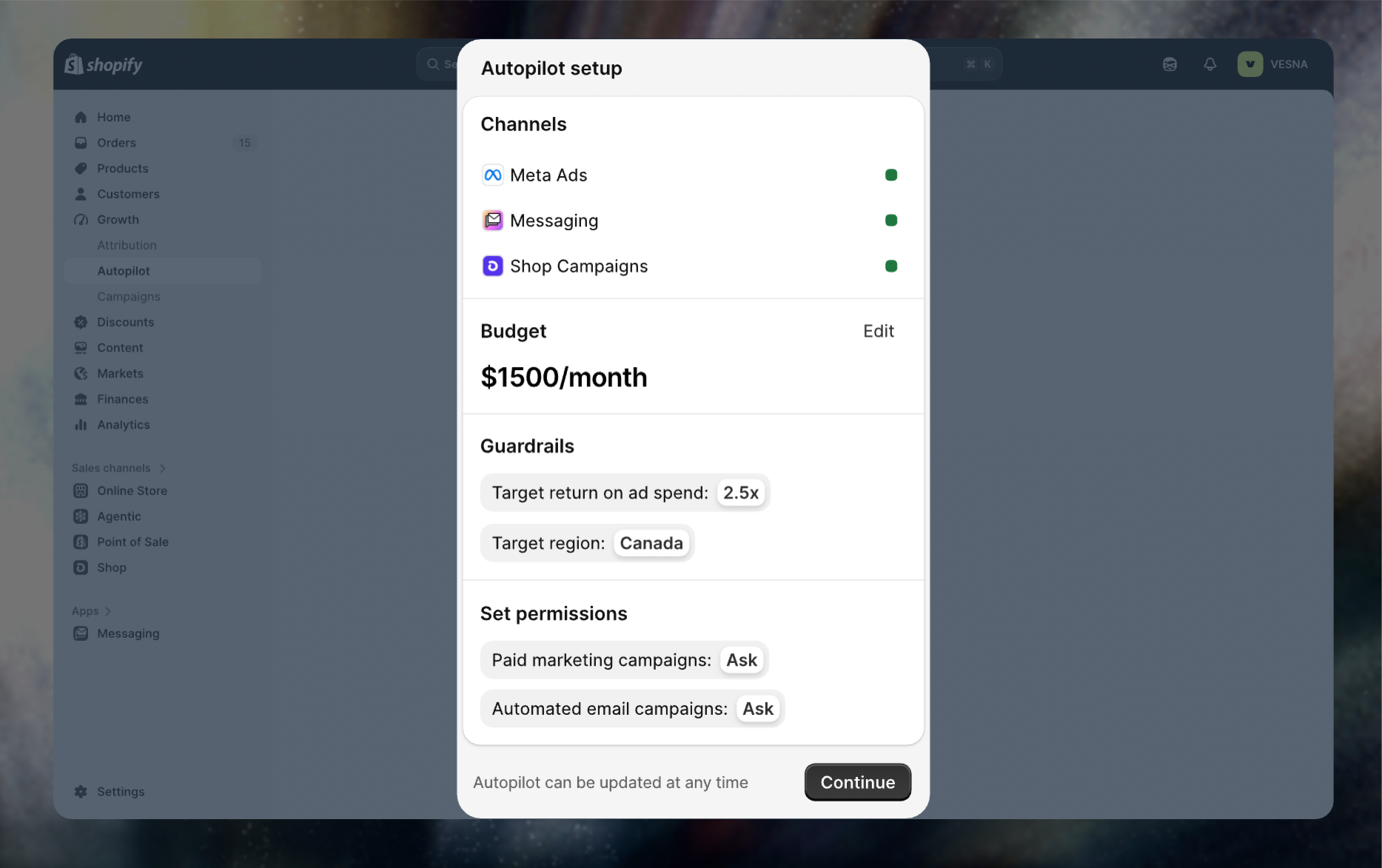
Campaign Autopilot is free on paid plans, you only pay the ad spend. You give it a budget and a goal, and Shopify's AI runs campaigns across Meta, the Shop app, and email, in their own separate campaigns that don't touch what you're already running. Shopify sees your conversions, which arguably makes its targeting sharper over time than platforms that don't. Give it 10 to 20% of your ad budget and a two-week leash, and don't judge it on day three.
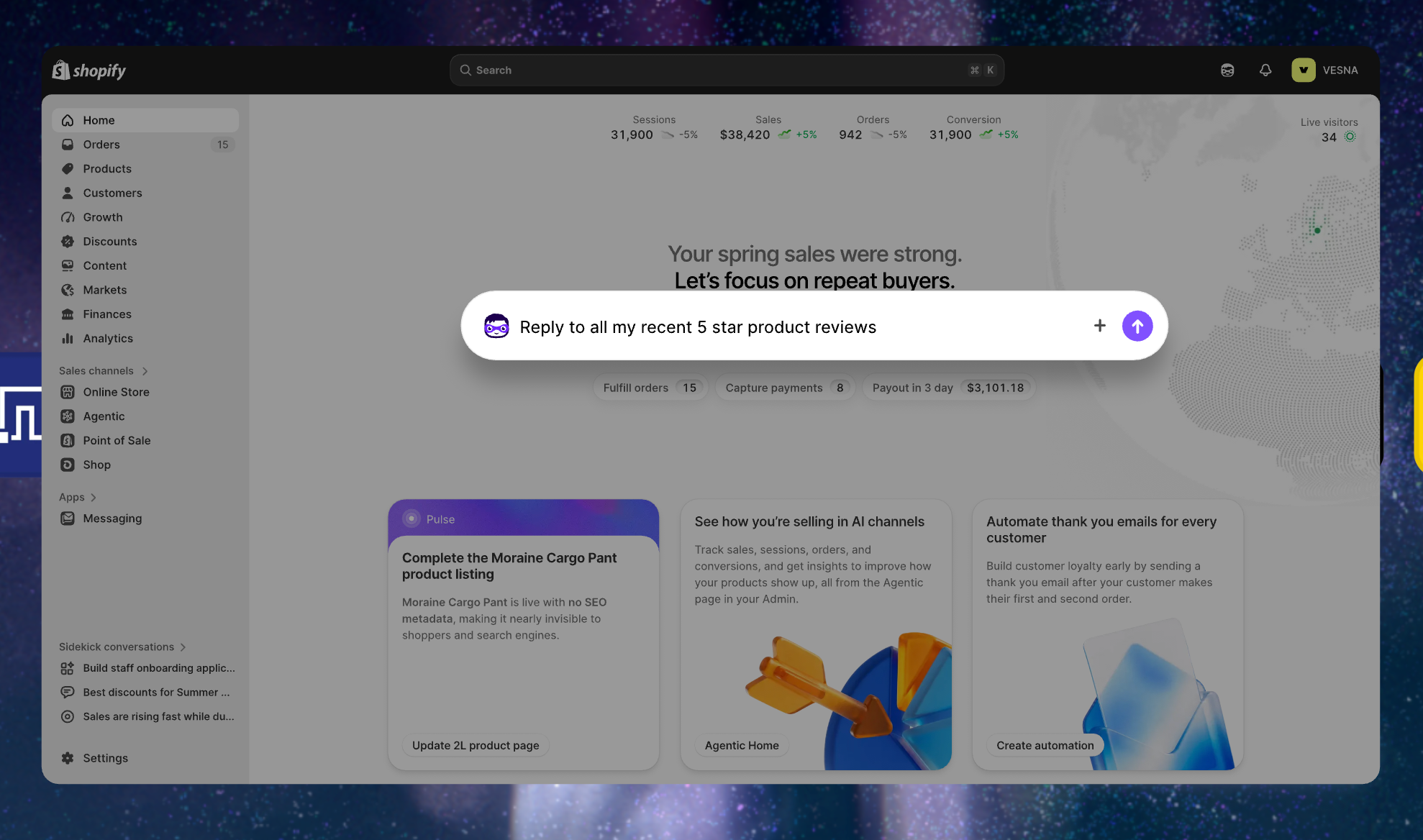
Sidekick now works inside your other apps, Loop, Smile, Judge.me and 15-plus partners, not just Shopify itself. Is it real or is it hype? Shopify reported weekly active shops using Sidekick up 385% year over year, and merchants building over 12,000 little custom apps with it in a single quarter. Real.
Rollouts lets you schedule theme and checkout changes instead of having someone stand by to hit publish at midnight, and on the Grow plan and up, run a real A/B test so the money settles the argument instead of the loudest voice in Slack.
B2B came down off Plus to Basic, Grow, and Advanced. Net terms are the quiet headline. Letting a wholesale buyer receive goods, sell them, and pay you in 30 days is often the whole difference between "yes" and "let me think about it," because you're protecting their cash flow. Shopify says B2B merchants see up to 4.1x higher reorder frequency. Wholesale buyers come back, that's the entire point of wholesale.
Do cross-border and checkout speed really move money?
More than people think, and here are the hard numbers. The average cart abandonment rate sits at about 70%, and roughly 48% of shoppers abandon because of unexpected extra costs at checkout, the number one reason for six years running, according to Baymard Institute's 2025 research. A customer in Germany who sees one price at checkout and then gets ambushed by a surprise duty bill from the courier is never buying from you again. Shopify Markets and Managed Markets, with duty-inclusive pricing, exist to kill that exact moment. The same logic shows up in POS v11, where returns, exchanges, and a new sale now happen in one cart. Every second someone waits at your counter is a second the three people behind them decide whether to set the item down and walk out. I've done exactly that, put something back and left a line because I had to get my kid from school.
So what's the one thing to do tonight?
Forget ten of them. Open your admin, go to Sales channels, then Agentic, and look at what's already on. Then take your single best-selling product's URL, paste it into Claude or ChatGPT, and ask it to tell you everything it knows about the product from that page alone. Whatever it gets wrong or can't answer is exactly what you go fix. FAQs, materials, use cases, the obvious buyer questions. That's the whole job.
I've been selling online since 1998, and I've watched the thing that drives traffic change hands a bunch of times, search, social, paid, influencers. Every single time, the merchants who moved early, while it still felt weird and small and unproven, got rewarded. The ones who waited until it was obvious paid a lot more to catch up. This feels like one of those moments. I'm not certain how fast it all lands, and some of these features are early. But the work of having clean, clear, honest product data pays off no matter which way the AI stuff breaks.
The full walk-through of all 11 features, who each one is for, and the exact next step is in this week's Shopify1Percent episode. If you find it useful, follow the show so the next one finds you. Now go fix one product description.
Does Shopify Back Up Your Store? What the Terms Say.