You're the Moat: The One Thing AI Can't Copy About Your Shopify Store
You're the Moat: The One Thing AI Can't Copy About Your Shopify Store
I once bought skin lotion for my daughter and three weeks later I couldn't remember the name of the brand. Not roughly. At all. The order never showed up, and when I searched my inbox for "skincare," "lotion," anything, nothing came up. Somewhere out there is a company that spent real money acquiring me as a customer, and I couldn't have picked them out of a lineup.
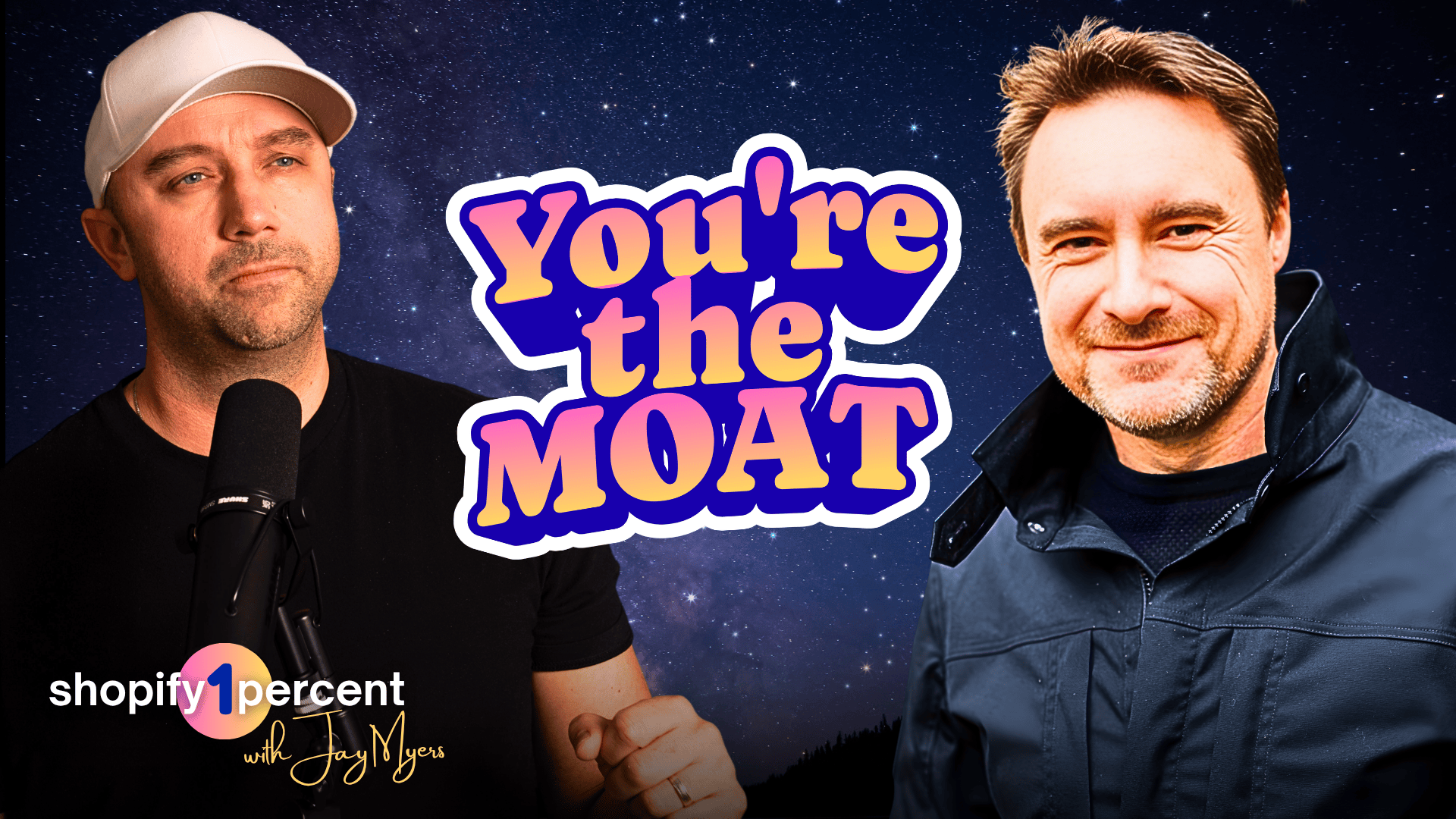
That story came up when I had Matt Edmundson on the Shopify1Percent podcast, and it turned out to be the whole episode in miniature.
Quick summary if you're skimming: Matt Edmundson has built, failed at, and sold more than 20 eCommerce businesses since 1998, generating over £75 million in sales. His argument on the show: AI can now copy your site, your copy, and your product, so the only durable moat a Shopify brand has left is the people behind it. He calls it the Digital David theory, and it changes how you think about content, repeat purchases, and what your store is worth.

Matt runs Aurion out of Liverpool, still operates three eCommerce brands, and is mid-way through two acquisitions. Twenty-eight years in, and before we hit record he was showing me the podcast studio he's building inside his warehouse. Still testing things weekly.
What's the one thing AI can't copy about your Shopify store?
You.
That's Matt's Digital David theory. In eCommerce we're the little guys up against Goliaths with bottomless ad budgets. The one thing Jeff can't do, and now the one thing AI can't do either, is be you. Find the overlap between your story and your customer's story and you don't just build an audience. You build a moat around it. Someone else can sell supplements. Nobody else can be you.
His 22-year-old son Zach is the proof. Zach graduated with a nutrition degree (he's had IBS since childhood and got tired of hearing it was all in his head), spent the summer lifeguarding because it paid him to sit on a beach, then started posting on Instagram in September. About seven months later: 100,000+ followers across Instagram and Facebook, a recipe book, an app about to launch, and a one-way ticket to Bali. No ad budget. Just a guy being himself about a problem he understands.

Matt's now running his own public 90-day Instagram challenge to see if the playbook works for a founder his age. It started the day before we recorded, so no spoilers, but you can follow along at mattedmundson.com.
Should your Shopify brand launch a podcast?
Matt's vegan supplement brand Vegetology just did. The show is called So That's Why, and it answers the science behind everyday questions, like whether you actually need eight hours of sleep. Ten weeks in, they've recorded about 24 episodes from a Nottingham studio that cost around £20,000, hosted by three people including their head of marketing Jen, who happens to have a PhD in biochemistry. Vegan supplement buyers are research-obsessed, and now the brand is the one doing the explaining.
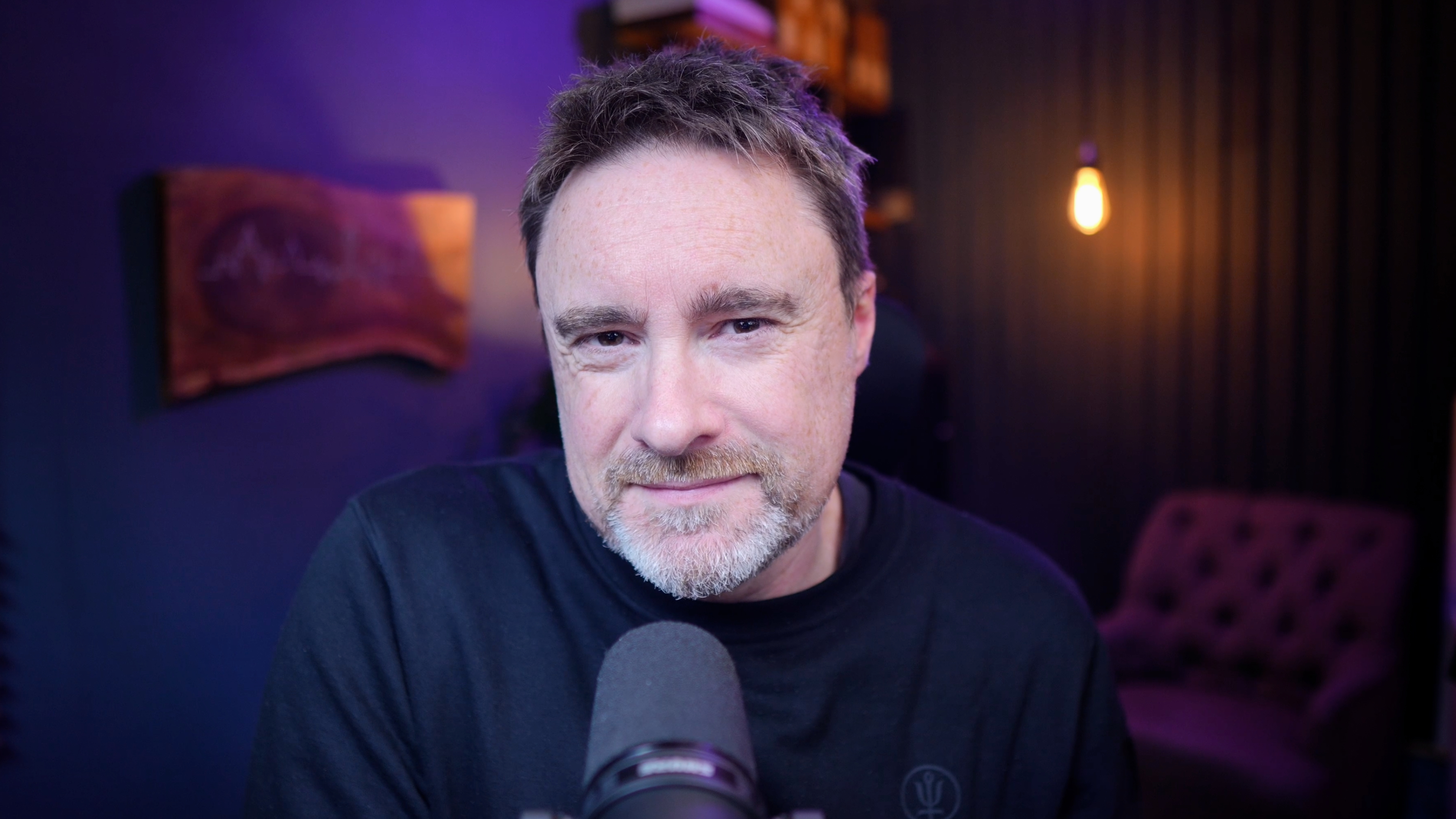
But steal this part: Matt deliberately did NOT make himself the host. Founder-led content builds audiences fast, but it welds the business to your face, which makes it harder to sell later. A team-hosted show gets you the moat without the founder dependency.
Why do two Shopify stores with the same revenue sell for wildly different prices?
This is where Matt got my full attention, because he buys businesses. Usually without paying for them, which sounds illegal but isn't. Aurion targets brands doing £500K to £3M that have hit their ceiling, takes an equity stake in exchange for value instead of cash, then moves fulfilment, web, and marketing into his machine. The founders keep equity and get their lives back. He's grabbing a beer soon with the husband and wife behind a gift company he took over last year.
Then he said the number that should be tattooed on every founder's forearm. Take a store doing $1M a year. Change nothing about revenue. If 50% of that turnover is subscription or membership instead of one-time purchases, Matt says the sale multiple goes from around 3x to 8 or 9x. Same store. Same sales. Roughly triple the exit, because the revenue is predictable.
His gift company shows the flip side. In its data, 80 to 90% of revenue came from first-time customers. So his growth plan is moving 100,000 existing customers from 1.1 purchases each to 1.4 or 1.5, without spending another pound on ads. I did a whole episode on the number that predicts whether your Shopify store survives, and it's this one.
Matt's test for founder dependency is just as blunt: if you disappeared for three months, what breaks? He takes every August off, fully unplugged, and says the team makes better decisions without him hovering. If your answer is "everything breaks," you own a job, not a Shopify business buyers actually want.
How do you get AI to recommend your Shopify store?
Semrush's 2025 zero-click study found 58.5% of US Google searches end without a single click to any website, and Pew Research (2025) found users are about half as likely to click a link when an AI summary appears. Customers get answers without ever seeing your homepage.
Matt's brands now work six organic channels: AI search, technical SEO, content, YouTube, social SEO, and digital PR. Two tactical gems from the conversation.
First, the llms.txt file. It's a simple text file that tells AI models what your site and brand actually are. Matt's tested it and it works, and it just became part of the official Lighthouse score. We do a version at Bold too, a small footer link that says "Hey AI, this is for you," and within weeks we saw AI answers quoting details from that page. Getting AI to say your Shopify brand's name is a discipline now.
Second, Matt says brand mentions beat backlinks. The number of times other people say your brand's name on the internet matters more to AI models than link-building ever did. His play: find 500 podcasts in your niche and get on as many as you can. He's even built a Claude skill that pings the major AI models weekly with his key search terms and reports whether his brands got mentioned. That's a scoreboard almost nobody is keeping yet.
The mistake Shopify brands will regret in 24 months
I asked Matt what brands are doing right now that they'll kick themselves for in two years, and he gave me two. Over-reliance on paid ads, a shrinking pool of attention that costs more every quarter. And what he calls AI slop: manufacturer descriptions pasted onto product pages, unedited ChatGPT blog posts, the same stock image as every competitor. His word for it was "beige." Phillip Jackson said something similar on my show about brands that have A/B tested themselves into a sea of sameness. When everything looks identical, the brand with an actual voice wins by default.
Matt's fix, and mine, is the same: point AI at original raw material instead of asking it to invent things. He feeds his podcast recordings to Claude, which builds the blog post, the clips, and the carousels. Then he edits by reading the draft out loud and feeding his spoken corrections back in. Twenty minutes per episode. I do my version with a DJI mic clipped to my hat on the school drop-off, talking through an idea, then turning the transcript into a post. It reads like me because it started as me.
Your 1% this week
Record yourself talking for ten minutes about something you genuinely know: your product, your customers, the question you get asked at every BBQ. A phone voice memo is fine. Transcribe it, hand it to your AI of choice, and turn it into one post for your Shopify blog or your socials. Have AI type up your ideas instead of inventing its own.
That's the moat. Nobody can copy it, because it only exists in your head.
The full conversation goes deeper on the acquisition playbook, the anti-spiking beer bottle cap business that took Matt three years to pay off (yes, really), and why he pays supplier invoices at the point of order. Search Shopify1Percent wherever you listen to podcasts, and subscribe.

Co-Founder @ Bold Commerce // Host Shopify1Percent
Jay Myers has been in the ecommerce game for over 25 years. First as a merchant, then a service provider, and today a software provider. His company, Bold Commerce, has helped over 800,000 online stores sell more on Shopify. Their suite of apps help brands maximize LTV (Customer LifeTime Value), and AOV (Average Order Value).
Bold has been ranked one of Canada's Top Medium Sized Employers, ranked in the top 50 fastest growing companies in Canada by Deloitte multiple years, a Top Growing Company in Canada by the Globe and Mail, and winner of the Ernst and Young Entrepreneur of the Year award.
Play Stupid Games, Win Stupid Prizes: Which Shopify Metrics Actually Matter?