Why Are Shopify Brands Quietly Spending Millions on... Postcards?

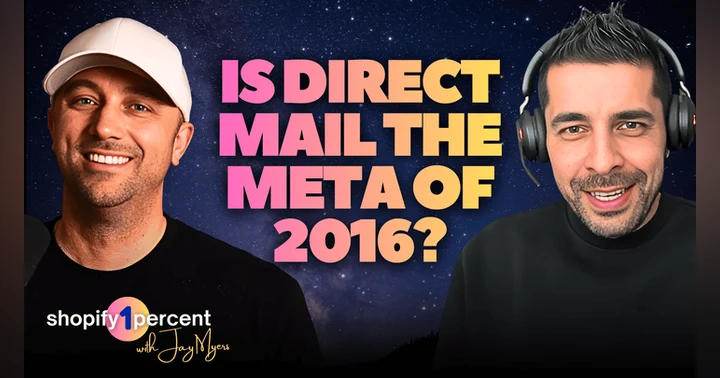
Is Direct Mail the Meta of 2016 All Over Again? It might be why 82% of the Top 1,000 Shopify Brands Mailing Postcards 😉. I mean, paid acquisition is essentially broken. Attribution is a fantasy, and your Meta dashboard is basically a slot machine at this point.
So when I started hearing Shopify brands quietly crushing it with direct mail (yes, the thing your grandma still gets), I had to dig in. I

 Apple Podcasts
 Spotify
 YouTube
 Amazon Music
 Audible
 Is Direct Mail the Meta of 2016 All Over Again? It might be why 82% of the Top 1,000 Shopify Brands Mailing Postcards 😉. I mean, paid acquisition is essentially broken. Attribution is a fantasy, and your Meta dashboard is basically a slot machine at this point.
So when I started hearing Shopify brands quietly crushing it with direct mail (yes, the thing your grandma still gets), I had to dig in. I sat down with Neal Goyal, SVP at PostPilot, to break down how direct mail became the sleeper performance channel for Shopify brands in 2026. We're talking 100% open rates, 9 to 12 touchpoints per piece, and brands pouring millions into postcards because they actually print 4 to 5x ROAS. If you run a Shopify store and you're tired of watching CAC eat your margins alive, this one's for you.
💡 KEY TAKE-AWAYS:
- Why Neal calls direct mail "the Meta of 2016" (and why getting in now matters)
- How 82% of the top 1,000 Shopify brands are already mailing... are you?
- The sleeper acquisition play most Shopify merchants don't know exists yet
- How do you actually retarget anonymous Shopify website visitors with a postcard?
- What's the one type of mail that converts WITHOUT a single offer or discount?
- Why your "suppressed" Klaviyo list is leaving real Shopify revenue on the table
- The supplement brand trick that turns one product into 4 personalized campaigns
- How much does this actually cost? (Spoiler: less than your daily Starbucks)
- The exact mistake brands make on their first direct mail campaign
- Why Neal moved from SaaS to ad spend (and what it says about the future of Shopify apps)
🛠️ RESOURCES & LINKS MENTIONED IN SHOW:
- PostPilot: https://www.postpilot.com
- Neal Goyal on LinkedIn: https://www.linkedin.com/in/nealgoyal/
- Klaviyo: https://www.klaviyo.com
- AG1 / Kat Cole story (referenced): https://drinkag1.com
- Shopify: https://www.shopify.com
🎁 SPECIAL OFFER FOR SHOPIFY 1% LISTENERS:
Neal is hooking up Shopify 1% listeners with a 25% match on your PostPilot pilot spend. Start with $5K, get $1,250 in free spend. Start with $25K, get $5,000. Sky's the limit. DM Neal directly on LinkedIn and tell him you came from the Shopify 1% Podcast.
Did you know leaving a ⭐️⭐️⭐️⭐️⭐️ review on Spotify, or Apple will give your shop gooood ecommerce karma? ❤️
Jay Myers: [00:00:00] Paid acquisition it's gotten harder over the last couple years. You all know that everyone listening hasn't just gotten harder, it's gotten less reliable and way more expensive. But there's something that I'm hearing a lot of brands doing that's working and it's direct mail, and it's not just working.
I'm hearing about brands crushing it with direct mail, and it can actually be a real performance marketing channel. It's not just. Thank you Letters. It's a performance marketing channel that you can measure, that you can grow, that you can track. So I wanted to bring on our show, Neil, with Post Pilot, which just recently with Post Pilot.
I wanna talk a little bit about like why you decided to join Post Pilot. I know you're excited about what they're doing, so excited to hear about that. But I want to get into the mechanics of how Direct Mail works, where does it fit in, how do you implement it? How do you measure it, like a performance channel, all the nitty gritty.
So first of all, Neil, thank you so much. Welcome to the show.
Neal Goyal: Jay, it's an [00:01:00] absolute honor to be here. I've been following your journey for such a long time and just the fact that being invited as a guest on the show, just absolutely thrilled and honored to be here, so I appreciate it.
Jay Myers: Well, thank you so much.
That means a lot. And it's funny, we've been following each other's journey, but we didn't know we were following each other's journey, and then we bumped into each other on LinkedIn, and the rest is history. Why did she tell me about post pilot? Why did you. You made the move over. Tell me, first of all, what is post pilot and why were you so excited to join the company?
Neal Goyal: Yeah, great call. I think if you know me in person, if you know me as a teammate, if you know me as someone who serves a customer, as if you know me as a persona on LinkedIn, I'm basically the same human being in all of those places, which means I'm super optimistic. Always overflowing with optimism, high energy, over caffeinated, all of those things, right?
In every room I'm in, in person or virtual. That's how I am. And that is a direct reflection and result of the happiness and joy I get out of serving [00:02:00] the e-commerce community serving e-commerce brands. I genuinely love what I do. It's amazing. I just I'm just very expressive in showing that in, in all formats, which also means I'm very bullish on the space.
Like hyper bullish on the space. But there came a time about eight months ago where I felt like I needed this, like this moment of like, I don't know, therapy, but it was not therapy in its traditional sense, therapy in the sense that. As bullish and optimistic I was for the Shopify merchant and what the road ahead looks like for them as they grow scale their brands.
I had a very growing and dark view for the software ecosystem that supports that space.
Right. Very dark view, right?
And for me, that caused this. Very conflicting belief. So bullish over here on brand side.
And a very bearish view on the software that's supporting all of these brands, right?
Jay Myers: So,
Neal Goyal: and that really kind of came from a three [00:03:00] part journey to this, I guess, climactic moment in realization. The first part of the journey started in like 2021 I would say. Where. It's just post COVID now. We have 4 million brands that have popped up on Shopify. 14,000–15,000 have that support them have popped up overnight.
Right.
Jay Myers: Yeah.
Neal Goyal: So, those are looking back in my days at Tapcart where Okay. Amazing provider been around for a long time, since before the go-go days. And when you think of all these new entrants that come into the ecosystem with a very limited Shopify TAM. Arguably you have 14,443 companies chasing the same 2,000 brands on Shopify.
These poor inboxes, these email inboxes, right? I can only imagine now. That created a, like, starting of like a race to the bottom effect almost, right? In terms of pricing and competition. And just like, yes feature, but like the commoditization was [00:04:00] accelerating quickly.
Now that's nothing new. That's in literally every category of e-commerce, whether you're a loyalty provider, subscription provider, mobile app provider. It doesn't, it didn't matter. Like it was a downward pressure on price, right? But
Jay Myers: yeah,
Neal Goyal: all adapted to that. And then phase two came about. That was the start of 2023 where AI to build software was a new thing.
ChatGPT hadn't really hit the scene yet, right? On a retail consumer front, but AI building software, there was this like new up and coming group of software companies that came and it was like four humans in a basement could build 90% of what a legacy provider took seven years to build. They could build in four months. And they did build in four months and they were able to. Charge pennies on the dollar in that process. So accelerated that race to the bottom by virtue of AI building software, right? Yep. So if you think about someone that's like needs to be part of a career that is focused on, hey, there's gonna be a great exit someday, [00:05:00] there's a potential for real scale that churn is.
The challenge you're focused on all day every day.
It really made it quite difficult and very limited. Like I see myself in e-commerce till the end of time, until they put a bullet in the back of my brain in the backyard. I'm in e-comm, right? But then where do you go in e-comm if you really wanna see a tailwind?
So that came into part three of this kind of dark view, and that's this whole concept of agentic commerce, which is kind of a fancy buzzword right now. No one really knows exactly what that is, if we're getting greater signs of what it could be from like learning from what Shopify is saying and whatnot.
But we really don't know what two years from now is gonna look like. Like we're all kind of guessing. But what we do know is that the way consumers shop right now is gonna be different.
Jay Myers: Right.
Neal Goyal: We just know that we don't know what it's gonna be, but we know it's gonna be different. And the website is not the only place people are gonna go to shop anymore.
It's, right now we force a customer, Hey, you like it, you're interested. Go to this [00:06:00] www.com, add a couple products to cart, check out and force everybody down that same funnel. And in this world of ag agentic, everyone's gonna have their own buying behavior, buying patterns. The amount of ways someone can make a purchase is gonna be limitless in my view.
So the value of the, A website, a static website. Got it. That word static is almost like taboo to say out loud, but like the value of a website actually goes down over time, right? And therefore, the software supporting the website
And the value to the brand goes down over time. So the question is where do you go?
Jay Myers: Yep.
Neal Goyal: If that's the case. And so that's why I entered the world of ad spend. Post Pilot is not a software company.
We are a software company, but we're not SaaS. We're not selling software as a service. We're sell, we're ad spend. We're an ad network. Right? So the question is what is a brand willing to pay meta If it's printing five x, that'll go up into the right forever.
Like they'll never turn that off. If it's printing five x, never turn that off. Like you can go into [00:07:00] the millions and never. Same thing with AppLovin up into the right could go forever. Same thing with Post Pilot. If it's performing, it's an ad channel, it can it has unlimited runway. And so that's why I actually moved into the ad spend world as opposed to software.
Jay Myers: It's a, I just want, I had so many thoughts, so I wanted, I really appreciate your well thought out process there. And I didn't wanna interrupt, but like, so many thoughts are coming up to mind. 'cause I mean, I think everyone is thinking this and there's so much uncertainty and I mean, we are, we have products for sure that AI will be a threat to, I think, I mean, it's not just SaaS.
I, the last person I had on the podcast was an agency owner and he said the same thing. He's like, I don't know what our future looks like. Is, am I, is agency work going to exist or are we gonna just be. AI consultants or and to say people might not be coming to your website. I don't it, it maybe [00:08:00] sounds radical, but it's really not.
If you go back 20 years and you would go to a brick and mortar store and you would go to Macy's and say, people won't be coming to your retail store one day, and they said no. And they had different divisions. There was the retail division and the e-commerce division, and then eventually it just became one, it was commerce and they tried to bridge that gap.
And now. The website will be the legacy channel, and it's unclear what the exact way it's gonna play out. But I think we could all agree that there is a better way. And once you do something once like when you experience something like, say you go to a really good hotel or you have really good service at a restaurant or something, you do something that's like a really great experience.
They're saying like, it's hard to go back. And like once you use chat GPT to find an answer to a problem you have, like you're fixing a dishwasher, I dunno, let's just say, and it tells you, and you hold up your phone and it scans the [00:09:00]dishwasher and says, oh, I can see the issue here. It's hard to go back to Google and search and scour through blogs, and read blogs and find a YouTube video and find the spot in the video.
Like it's painful. It wasn't painful until your eyes were opened. And you saw, holy cow, like I have the meta glasses. I can put 'em on. I can say, Hey, meta, tell me how I need to restart this dishwasher as a, as an example. And we don't even know what better is until we experience it. And so I think it's coming, but we like no one can say because, but as soon as you do, and it's like, it's on the horizon and it's right there. And it's, I think your thought on what the value that post pilot brings, I think is bang on. I guess we should define what that is for listeners. So what does post pilot do?
Neal Goyal: Yeah. I mean, great call out. So when you think about what got me so excited about joining posts worth understanding.
Okay. So where do you go with your career? All of these things are happening by virtue of AI right now. [00:10:00] Right? And it really only falls into two buckets. You could go one, the AI first companies that are gonna shape what means, right? Shopify is obviously. Number one at the top of that list, and they're working with Google and OpenAI and whatnot.
But in terms of, I'm talking about like more niche software companies. We don't actually know who that winner's gonna be yet. So
Jay Myers: yeah,
Neal Goyal: whatever. If you choose to join that AI first AI native solution, we don't know who that winner is. And if you pick a right winner, great. That could be amazing.
Right. From my perspective I prefer to choose a second category, and that is let AI do its thing. Being a category that's truly defensible against ai. In other words, AI could just like make it better. Easy example, logistics.
You still need to ship a box to your customer. At the end of the day, that'll always exist.
AI is just gonna go make it better and more efficient and smarter. Right? Yeah. So, but oh my gosh, I could not sell logistics. I am not that guy. I am like a marketing. [00:11:00] Guy, right?
Jay Myers: Yeah.
Neal Goyal: So that goes into the question. It's like, okay, where is there a channel that really is desensitized to ai? And that is our physical home, right?
Yeah. The concept of physical home. And so that's what got me so excited about post pilot is post pilot direct mail for brands on Shopify. When you think about direct mail, you think about. This period of time where direct mail has been around since the beginning of time because we've had a home address since the beginning of time.
And, but and it's always been a part of brand strategy. It fell out of favor, like beginning 2017, I would say. Like fell out of favor as a channel because as Facebook took over, we as performance marketers became so programmed for click conversion, direct response. Measurement performance.
You can't
Jay Myers: track it. It's not worth doing. And
Neal Goyal: if you can't, there you go. You said it beautifully. Right? So we be, we as performance marketers, our behavior and standard [00:12:00] and changed. And so direct mail never really went away. It just got like. Downsized in budget or in priority and whatnot. And so that's where like post pilot was born was understanding that, hey, we've now fast forward seven years, eight years from that point, digital channels, I mean, there's amazing digital channels out there.
Everything's built on Meta to start and then TikTok App Loving and all of these other channels that are popping up retail media. But at the end of the day, they're getting harder. Yeah, they're getting more expensive over time. It's a noisier, right? It's much harder to capture the attention than it was before.
And so now the question is post pilot direct mail cuts through that noise, allows that in-real-life experience, but in a new school way that meets the performance marketers rigor and standard for measurement and demonstration of incre. That's where, that's why post pilot has been. Such a tailwind or had such a tailwind is kind of this old school meets new [00:13:00] school rigor for measurement and evaluating a channel.
Jay Myers: Okay, so let's talk about that real quick. What exactly I'm a Shopify store. Someone listening right now, what can I do with post pilot? So you say direct mail. What does that mean? I can mail my customers, can I send promotions? And you say you can track it like on a very practical level, what can I do with it?
Neal Goyal: At the simplest level, imagine you have a set of customers that purchased from you a year ago, but they haven't purchased in the past year. Right? They're familiar with the brand. They know the brand. They have obviously converted before, but they've gone dormant for whatever reason. They've may sub unsubscribed to your emails.
They haven't come back again to the website. This is an opportunity where you can deliver an in real life touchpoint, literally a postcard. That arrives in their mailbox. It has a hundred percent open rate because it's every customer is walking to their mailbox at some juncture over the course of [00:14:00] their week, and it delivers something that allows the brand to connect with.
The customer in just a unique and different way than they're not used to. Right? Again, a non-digital way. In that moment, the brand has the opportunity to build that relationship, has a or create craft, a unique offer. But that concept of sending a postcard is nothing new, right? The way it's said, set up, it is in the format of, hooking up into Klaviyo, having different segmentations being able to target a one-off postcard based on an individual shopper's.
Previous shopping history, previous attributes based on their own behavior, based on their actual onsite behavior, they can receive a one-off postcard. So traditionally you think of a mail house, I gotta go print 10,000 postcards and mail 'em all out. No, this is truly programmatic. It's just always on.
So as your customers fall into a particular Klaviyo audience or whoever you use for your segmentation, they fall into a particular [00:15:00] audience or segment, boom, trigger a card that day. It essentially ends up being Klaviyo for mail, right where you can throw them on the back of a welcome flow or an abandoned cart flow as well, and use it in.
Limitless fashion. Oh, they came to a website. They started browsing certain products, and then they just bailed. They didn't give an email, they didn't buy. We can determine that physical home address and target 'em with a single card based on what they were specifically looking at site. Right?
Jay Myers: So even if they never bought from you before, and you don't have them in as a Shopify customer.
You can de anonymize them through like RB two B and other tools, like is it that type of a data similar database and get their info and actually send them a physical card.
Neal Goyal: Yeah. So like what RB two B does for emails, we do for, we have our own in-house solutions for separate physical mailing addresses.
Right. So,
Jay Myers: and I guess you know, a customer on one store, if that customer is on another store who's [00:16:00] also using post pilot, you can. Connects them, I'm imagining, right?
Neal Goyal: That is correct. We, yeah, we understand through an IP address, we're able to yeah, match back to their physical home address and fire off a card and do so
Jay Myers: based on that.
So I shop online. I abandoned, I might get a postcard now in three days instead of the abandoned card email that I never open. I'm gonna get a postcard saying, Hey Jay, we saw you left this in your cart, and here's a coupon or something
Neal Goyal: thousand percent like right now. If you go to post, post pilot.com website.
And go click on a couple of blogs and if you spent over a minute on those blogs, you are gonna get a post pilot,
Jay Myers: no way
Neal Goyal: postcard that says, do you know why you received this card? It's 'cause you were hanging out on our site, reading our blogs.
Jay Myers: That's the best marketing. 'cause it's literally what you do and you're doing it to the customer.
Neal Goyal: Yeah, exactly.
Jay Myers: Yeah.
Neal Goyal: Right.
Jay Myers: That's awesome. So what are all the types of automations or campaigns that you can do?
Neal Goyal: Yeah, I mean we, we work full funnel and so when a full funnel, obviously retention, where we [00:17:00] typically would start is like lapse buyers. Again, like I mentioned they just haven't bought in a long time or a lot of brands are like, oh my gosh, I need to suppress certain audiences in my CRM to save on my.
Save on my Klaviyo costs or whatever. So they've like suppressed this audience because they've gone non-responsive on email. Well, that's a wasted audience, right? You can't like,
Jay Myers: yeah.
Neal Goyal: You effectively have given up on that audience. And so we have an amazing ability to retarget those and reinvigorate and reactivate that customer too.
So that's where we typically would like to start the customer to at least prove the channel out. Then we can move up funnel to what we call retargeting. That's like the onsite behavior. They've never actually made a purchase before or. Maybe they subscribed to a welcome flow. They gave you their email address, they went dead on a welcome flow because 90% of 90 plus percent of welcome flow emails don't end up yielding a conversion.
But we can de anonymize with email address and fire off a card on the back of that flow, right? That's like what retargeting is. And then the part that's most exciting and one of the reasons [00:18:00] why I joined post pilot is there's a lid on what every brand's willing to spend on retention. There's like a cap to it.
But what is a brand willing to spend on acquisition if it's performing? And there is no limit, like we said. Right? There's literally no limit. And so that's where post pilot has acquisition ai, true cold prospecting. You build lookalike audiences. Just like in meta, we are meta for mail, right? You can set daily budgets, you can target.
Jay Myers: How do you,
Neal Goyal: like you,
Jay Myers: you build a lookalike audience. Like, okay, so in meta I would. I have a, my website or I have upload and create an audience from.
Neal Goyal: Yeah. To, to a degree. I mean, we are using data sets from multiple sources as well as our own. So like, I you'll see traditional direct mail players that like, that are buying data and demographic sources to figure things out.
Jay Myers: Yeah.
Neal Goyal: We, we have the data. So for instance, JU we know what you bought from the 38 other [00:19:00] brands on Shopify to the penny.
We know you've gone over
a
Jay Myers: year as long as they're using, as long as they're also using post pilot.
Neal Goyal: Correct, correct.
Jay Myers: Yeah.
Neal Goyal: Right. We, but we now have the shopping history for every single human being in the United States on a Shopify brand. So think of Jay has gone over here to Ella Yoga and bought a hoodie and went over here to Reef and bought a pair of sandals and went over here to this brand.
We know your entire journey. We know what you like, what you don't like. We know what, when you subscribe, when you don't subscribe to a CPG brand. Yeah. We know what your LTV is with every brand you ever shop from. We know where you one and done, we know where your repeat are.
Jay Myers: That's insane.
Neal Goyal: And then, and so with all of that, how do we understand like what is a good, like what kind of persona is j that's a live shopper behavior thing, right?
As opposed to. I'm targeting males in this particular income de demographic. Yeah, and that's so vague. In general,
Jay Myers: 30 to 50-year-old people who make a hundred thousand dollars or [00:20:00] more, that's like about as granular as you can get with male, but you're saying I can target someone who's interested in yoga fitness gear.
Neal Goyal: There you go,
Jay Myers: or whatever. Yeah,
Neal Goyal: absolutely. Absolutely. You can also target and say, Hey, I wanna go for cold prospecting, but only target customers that have previously converted somewhere else with a postcode.
So, this is a customer that responds to the direct mail channel, right?
Jay Myers: Yeah.
And just to clarify the way you know, they converted. Shipping address. Like if you send to someone at a certain address and then an order comes in for that address, you connect it. Like they don't need to use a QR code or anything like that, they can just order it. That's correct. Yeah.
Neal Goyal: That, that's awesome.
That's correct. So we know the exact date it arrived in that particular customer's mailbox. There's like a delayed attribution window. So it's not like a Facebook ad Click convert. Yeah, but it, there's a delayed attribution. It might sit on the kitchen counter for a minute, but we'll know within seven to 14 days if they convert it and it'll show in Shopify.[00:21:00]
Jay Myers: Yeah. Isn't there some crazy stat that like the average piece of direct mail sits on a counter for seven days and is touched like nine times or something? I read this the other day, but like before, it's thrown out. Like, it's not llike email, you just delete. If you're not, it's some crazy number like that
Neal Goyal: thousand percent.
So if you think of like the length of the impression that you're getting Yeah. From the direct mail piece, it's absolutely wild. Like you think of. Instagram ad. It's like a quick thumb stop and then gone. Right? Right. And then you'd think of why App Loven has been so successful. It's because it's in game, but it's a forced like seven to ten second viewing time that you're forced to do so in order to continue playing your game like that.
The value of an app, love and impression is so much more than a meta impression just by virtue of what you're able to do from a brand copy. Creative perspective because they're forced to stay. They can't thumb, keep scrolling. They can't just hit skip. Yeah. And so the value of that, and then take it [00:22:00] one step further, the direct mail impression, you're absolutely right, sits on the countertop, sits on the fridge.
Constant reminder, how many times is it being seen before the conversion? Nine times is right. About anywhere from nine to 12 times someone sees a piece of mail before it, they act on it. Right.
Jay Myers: Amazing. Neil, I wanna take a super quick break. I got so many questions I wanna ask about. I wanna talk about what do the creatives actually look like?
Are these postcards templates, or can they be totally custom? Are they typed? Are they machine written? I know you have an amazing offer. You mentioned before the show that every single person listening is gonna wanna listen to the end 'cause you've got something really special for everyone. So we're gonna just take a super quick break to hear from the people that make this show possible.
So we'll be right back. Okay, Neil, I wanna get into, like, my mind goes to what do these look like? Like when I'm, you keep saying postcard that, do I have to pick from a library of templates? Can I upload my own? I imagine I [00:23:00]can, but what does it actually look and feel like?
Neal Goyal: Yeah, I mean, it is a four by six or six by nine cart, right?
In its default you, there's unlimited formats and sizes. There's no like limit to what you could do. But in terms of like, we would. As a standard, we would probably start with a four by six or a six by nine single card. In terms of creative, there is no limit. There's no template that we work off of, so it's a function of if the brand has a specific type of creative they wanna include no problem.
Candidly though, for like 98% of the brands we're doing 100% of the creative, 100% of the time. So they have a, we do all the designs. We have brands that have 78 different versions of creative for various campaigns and behaviors and audiences. We do all of that at white glove. There's no fee for that either.
That's just part of our offering of what we do, because from our perspective, this is always on channel, right? This is not meant to be this heroic, creative endeavor where it requires everybody on the brand team to get together and put together this [00:24:00] monumental. Piece that we do catalogs, but putting together a catalog is a big creative effort, right?
Certainly do 'em, but our bread and butter is just focused on saying, Hey, how can we get an in real life touchpoint in front of a customer? There's no limit on creative, and we do all of it for you in house. Right? And obviously with your final sign off
Jay Myers: is it is creative on one side and then on the back it's where the copy goes.
Is that a typical look and feel of it?
Neal Goyal: No, I mean really no limit to what you could do. So you could put creative on both sides. Obviously you have to leave a little bit of space on one of the sides for the actual address and postage and whatnot. But no creative's typically done on both sides and variations there.
There is no limit
Jay Myers: is there
Neal Goyal: on either side.
Jay Myers: I'm gonna ask all the stupid questions because I know it's gonna be in people's heads and they're gonna know. So do I have like an a WY editor that I can. Type in what I want the message to be like, the same way I would be creating a, like a, an ad or a, any other type of thing.
And I drag in images and I write the message. Is it, [00:25:00] is that the concept
Neal Goyal: That's exactly it. Exactly
Jay Myers: it. I'm saying can I can merge in their first name and some other data to exactly personalize it as well.
Neal Goyal: Absolutely. So, think of most of our brands are like using Figma or something like that.
You can pull that right in or a Canva and pull that right in. But then dynamic fields, absolutely. So we can have every single human being's name and what they previously maybe even shop for or anything personalization wise, it, from them. A lot of, like for instance, supplements, brands, you have a supplement that says the supplement has multiple use cases.
One person bought it because they are looking to lose weight. The other person bought the same supplement 'cause they want to live longer. The other one is they want to feel younger and the professional wants to have, feel sharper, right? And this one magic supplement does all four of those things.
But oftentimes, you don't like those brands are using like a post-purchase survey to understand why. They bought in the first place. And if you do [00:26:00]understand that, well then that gives you the opportunity to follow up with something that's personal to that customer and say, Hey, how is your weight loss journey going?
Right?
Jay Myers: Yeah.
Neal Goyal: How is your longevity?
Jay Myers: Or send them content journey
Neal Goyal: going
Jay Myers: so you just make sure they're tagged appropriately when whatever survey tool you're using, or sometimes in the email capture, why are you here? Like, are you interested in men's or women's clothing or whatever it is.
Neal Goyal: Exactly.
Jay Myers: As long as they're tag, then post pilot can send appropriately.
Neal Goyal: That's right. Exactly.
Jay Myers: Amazing.
Neal Goyal: Yeah.
Jay Myers: What are the, what's the best practices? Like, as far as, I don't know. I heard someone, one time I was talking to he did direct mail. I don't know if he was using post pilot, I can't remember. But his, he was very big on sending. Thank yous without a marketing message.
He said, I send I send postcards or handwritten notes or, but direct mail. That's not a marketing message. And then [00:27:00] later on I find my. Messages, my direct mail gets a way better conversion if the first thing they get after an order isn't, Hey, here's our specials this week, or something like. Along those lines, is there any like hot tips for people as they're crafting their winbacks and their abandoned carts and their thank yous?
Like what's working and what's not?
Neal Goyal: Yeah, that's a great point. I think just we've really lost touch, I think with the concept of like longer term brand building. Community building and the investment that's like typically required for something like that, like in a world of direct response where we're so programmed to receiving the revenue now and seeing outcomes that are happening tomorrow.
Brand building customer relationships actually kind of took a backseat. Now it's coming back obviously into favor. In a bigger way, but getting to know your customer or even asking a question, showing the customer you care, showing them that you're following up, showing them that you understand them.
Goes a really long way. Postcards or [00:28:00] any other channel, not just postcards, any other channel, does not have to be a promotional channel. Channel. I'd say about a third of our sends that are going out are non offer based. They're, they're simple relationship builders and it still triggers. The conversion simply because the goal of that whole moment is to evoke a certain emotion, right?
How good do you feel like if you walk to the mailbox and then you receive a letter from like a grandparent? Like out of the blue, like a handwritten letter. How good does that like literally make you feel at that moment? You almost get chills. You're like, wow, I haven't gotten a handwritten letter in.
I don't know how long. And so what does it make you feel? People often don't remember exactly what you said, but they'll always remember how you made 'em feel. So how can we keep that in the strategy? Right. A brand, especially
Jay Myers: younger generation, like my kids, they're like, when they get a male, they're just blown away.
Like, what is this?
Neal Goyal: So it's so exciting, right? Yeah. So exciting. I think we're working with a brand right now that's focused [00:29:00] on targeting a gen, like a teenage audience of female soccer players, right? Very niche, right? 12 to 15-year-old soccer players. And what soccer players do is they braid hair.
Right. They braid hair as a part of the game. It's like a big thing, right?
Jay Myers: Okay.
Neal Goyal: And so they have a product that caters to the braider who's the specialist on the team that braids, right? And so they learn over the course of time why someone bought their product and they bought it for the purpose of soccer, right?
And the goal is now sending a touch point to the parent that says, Hey, how's your daughter's soccer journey going? Just know we're cheering her on. Right.
Jay Myers: So good.
Neal Goyal: There's no offer, but like gives you chills at that moment when you see the response there that in turn builds a can build lifetime loyalty.
Jay Myers: Totally.
Neal Goyal: Right. Totally. Just something so simple like that. It's the concept of showing you care as opposed to showing them you wanna give them a discount to buy something new. Right.
Jay Myers: Yeah. I would [00:30:00] imagine even, like team photos or something, just like if you have a, your team is. 10 people, 20 people, even just a few people putting a connection to the people behind a brand.
Like thank you from all, whatever could be tied to an event or a holiday, but no promotion, no nothing. Just the team and the mat and the dog, whatever, right? Just from all of us at whatever brand. It's people like you that. Allow our team to continue to grow, maybe show the team from last year, this year.
Anyways there's so many fun things you could do that are not direct ask for a purchase.
Neal Goyal: So true. Like the concept of making the customer part of the brand's journey, just like what you highlighted, it's such a powerful lever, or there's so many amazing brands that are still founder led, right?
Jay Myers: Yeah.
Neal Goyal: The most impactful physical touchpoint in the mail I received. Was from none other than Kat Cole, founder [00:31:00] of Ag one, right?
Jay Myers: Oh, okay. Yeah.
Neal Goyal: I, and it
Jay Myers: was a handwritten one or a,
Neal Goyal: it was a handwritten note postcard or a card that I got in the mail. Not a postcard. It was in the box itself. And what was so powerful about it is I had written to Kat and I said, Hey, just wanna let you know.
I'm like on this new health journey. A year and a half ago, I'm under, two years ago I'm on, a new health journey. Just wanna let you know I have this AG1. I'm so embarrassed because I bought this AG1 like nine months ago and it just sat in my pantry and I didn't do anything with it, but I started it now better late than never, and I'm really excited to to get going.
She responds immediately via DM and says. Wait a second. I need to get to you a fresh batch. That's ridiculous, right?
Jay Myers: Amazing.
Neal Goyal: Gimme your address. I gave her my address. Three days later, I receive a box in the mail. I open the box and there is a handwritten note from Kat herself saying, wishing you well on [00:32:00] your journey.
Like, I appreciate you reaching out to me. Like literally it was, there was nothing automated about it. This was like truly like, wow, you literally, I just told you. My story, you put it in and here's your free batch and here's a card and sign Cat Cole. And I'm like, okay, you got me. That's cool. You completely got me.
Like those are moments you just don't forget. And that's what makes it powerful. Like does it have to be, it can be a performance channel in terms of measurement, doesn't need to be treated like a performance channel in the way you actually interact with the customer. And I would argue those are two different things.
Jay Myers: Yeah. You've probably told that story to 50 other people. I imagine I'm not the first one you've told that story to. So it, it didn't just impact you. It's probably impacted what's the math on that they say is when you do one good thing for a customer, on average they tell seven. Those seven, tell five and those five tell three.
There's some, but if you do one, if one bad thing happens, a customer, it's [00:33:00] some crazy number. It's like they tell like a hundred people or something. It's, I don't think it's a hundred, but it's way higher. But it's, but there's a ripple effect. So
Neal Goyal: that thousand percent word of mouth is the most powerful channel you could ever have.
Jay Myers: Yeah.
Neal Goyal: Yeah.
Jay Myers: What is what are things brands can get wrong when they're doing direct mail? Like, what do you want? Avoid,
Neal Goyal: I think oftentimes, so two things. One is the concept of a brand that is testing a new channel, right? Like if direct mail is a brand new channel for the brand, they'd never done it before.
There's a tendency to wanna dip your toe in into the channel. Like there are no minimums to start. But I think the thing that I would recommend is like, start with multiple audiences, with whatever you're doing. Different audiences, different offers, different creative. It's like saying, I'm just gonna run one ad on meta and I'm gonna, I'm gonna do that.
Like everyone has different creative, different offers that are targeting different humans. Like take that same approach. And oftentimes, like you'll see brands that say, Hey, I have a very fixed [00:34:00] budget, which is totally fine, but make sure when you allocate that budget, you're allocating it against enough audiences.
So you understand, you get enough signal that says, Hey, this is working. This is not, let's scale here. Yeah. Let's pull back here. Right. So I think it's a function of testing enough audiences as opposed to just treating it as like a one-off campaign to a customer that's left.
Jay Myers: Right.
Neal Goyal: Right.
Jay Myers: Is there a certain amount that you think is a reasonable, like, with meta ads, if you're spending 10 bucks a day budget, you probably aren't gonna see, like there's a certain number you need to spend at least, I dunno what the magic number is, but in the hundreds probably to actually get some data and let meta's AI do stuff.
But is there some magic number like that for post pilot?
Neal Goyal: Honestly, there is no, there's no number. As long as you're testing enough audiences. I mean, people can start with. I dunno, $50 if they wanted to. Now it wouldn't give you enough signal, right? Yeah. To actually, but at the end of the day, just would say whatever you, whatever audience you te test [00:35:00] into, do so with a holdout involved.
Do so in a mechanism where you say, Hey, pick an audience I'm gonna send. To this audience and hold out the remainder not send. So you can actually measure that direct mail impact for of those that receive versus those that don't. That's how we measure incrementality in the dashboard. You're able to see incrementality on a campaign by campaign created by creative basis, and we do that through holdout testing.
Right. To understand direct mail impact.
Jay Myers: Oh, interesting. Okay. That was one thing I had on my list to ask you was about the actual dashboard. I'm sure everyone knows what their. Google ads and Facebook dashboard. Is there a similar thing where you have a campaign, you can see cost per send per, you can't, obviously can't see clicks or opens or all those kinds of other things, but you can see, I guess, cost and purchase.
Right. Is that, is there any other thing you track?
Neal Goyal: Yeah we track everything from L-T-V-A-O-V,
Jay Myers: Oh, okay. Of that customer who you [00:36:00] sent to that cohort. Oh, interesting.
Neal Goyal: That cohort conversion rates Yes. Every, everything. Yeah. We're able to measure all of that. And that's what that's where traditionally when you think of a mail house, yeah, that's sending out mail.
Like you receive this spreadsheet and you're like, these are the people that bought at some point after receiving mail and you couldn't really measure it. Whereas here, you're able to see it with like true precis.
Jay Myers: Right. That makes so much sense because it's like if you have a billboard or something and you don't know, you can't say someone drove by and bought something.
But if you know everybody who lives in that neighborhood and they see that billboard every day, and you can see that cohort is worth 20% more LTV, then a neighborhood that doesn't have the billboard, you can connect the dots. And so I can track if I'm sending out. Direct mail. Mail that doesn't have a call to purchase.
It's more the relationship building. I can still segment everyone who's gotten it, what's their light, LTV, reorder rate, all that good stuff versus customers who have it. [00:37:00]
Neal Goyal: Exactly.
Jay Myers: That's the, yeah. Okay. Makes
Neal Goyal: thousand percent. Thousand percent. Again, it's a, it's not about just driving. Any customer into the funnel, it's about driving the highest LTV ones in the customer.
So we're actually able to measure that and show the demonstration of like what kind of customers are you bringing to the funnel and then measure 'em on an LTV basis as well.
Jay Myers: Yeah. Amazing. So what does this look like for cost? I mean, just gimme a ball. I does it. Is it per. Percent. Do you have to pre-buy a whole bunch?
Is there a cost for the platform, but then also just what does that look like?
Neal Goyal: Yeah, so, like, like I mentioned, there's no minimums. And it's just basically on a per card basis, so
Jay Myers: Okay.
Neal Goyal: Like, yeah, we, you just pay a, it could be anywhere from 50–60 cents per card. And then we, you choose the volume, you choose the automations, and you're essentially just paying on a per card basis, right?
And there's no minimum to start with or a commitment of any kind.
Jay Myers: And then postage is kind of baked into, is baked
Neal Goyal: into that.
Jay Myers: Oh, okay. Okay. Amazing.
Neal Goyal: Yeah. [00:38:00] That's inclu, that's inclusive of everything that's like out the door. Yeah.
Jay Myers: That's extremely reasonable. Like, I mean, I think anyway, so amazing.
What haven't you told us that you want listeners to know about post pilot?
Neal Goyal: I think that the most. Post pilot is been on a wild trajectory. I mean, we are arguably a top 20 in the Shopify ecosystem By revenue.
Like, like total sleeper though. Like you wouldn't have thought. Right. But you know, we.
We are up there when it comes to size and that, that's been a quiet journey for the most part. When I say quiet, not quite as notable or recognized as like a Klaviyo or whatnot, but we're pretty sizable and how we've gotten there has happened particularly in the last 18 months with the acquisition piece.
And so that's what we unlocked, I think, that most people actually still don't know about is that when they think about direct [00:39:00] mail, they think. Reactivating lapsed customers, like that's the default.
Thought process, like a retention type of strategy.
Jay Myers: That was the only thing I thought it did was existing customers nurturing, winning them back, abandoning, but not finding new acquisition.
I had no idea, to be honest.
Neal Goyal: True cold programmatic acquisition, meta for mail. New thing for us generally, like in the past one year or so.
Jay Myers: Okay. Okay.
Neal Goyal: That's been also, that's also been the big unlock for post pilot too. Yeah, so brands, like I mentioned, have a cap on what they're willing to spend on retention, but we have brands that can go and spend millions with us right now.
They are spending millions with us right now because they can treat it like an alternative toMeta.
Jay Myers: $1 is turning into four or five. Like Yeah, like you said earlier, this, the sky's the limit.
Neal Goyal: So at this point, we're being compared on those, that part of the budget, we're being compared left and right to meta.
We're being, compared to TikTok, we're being compared to all the performance channels [00:40:00] and brands are allocating and shifting budgets based on all of that. Right. Like a true performance channel. So that's been the big unlock and, but it's been a quiet one, I would say. Right. Like most brands are not aware that we have this kind of acquisition solution.
It's relatively new. And it hasn't been marketed in a massive way either. That's all gonna change here in about 60 to 90 days or so, but, Okay. Where we have a pretty big go to market push on it, but I think that's the sleeper of all of this that has taken us Yeah. To where we are today in terms of growth and is what's gonna propel us going forward.
Jay Myers: Is it a fair statement to say brands should probably jump on this now because, I mean, I don't this, I don't imagine this will happen anytime in the near future, but if. Every single Shopify store used post pilot, that would be the ideal scenario, of course. But if every single store used post pilot, I would go to my postbox and have 70 postcards in it and I would get postcard fatigue the same way I have email fatigue.
But that's nowhere [00:41:00] in the near future. But arguably it might, like the smart brands I talk to are doing direct mail. So is there like, like. Is that a message you tell people? Like, Hey, get on this like early, it's like, I wish I was in on meta ads in 2008 or whatever, like is it, get it on this now because it might not be gravy like it is in five years or 10 years, or.
Is that a fair
Neal Goyal: statement? Yeah. Saturation is, like is kind of what you're alluding to and yes. That's a long time from now. I think it's a really long time from now. I would say like right now I'd call ourselves meta of 2000. 17 or 2016. Right. Like early days where the juicy you could really the juicy
Jay Myers: times.
Yeah.
Neal Goyal: Where you can really exploit things and capitalize on this. Yeah. If people said, sending more direct mail, obviously mailboxes get more crowded, but at the same time, how, going back to the value of the impression itself and the personal touchpoint, like [00:42:00] nothing will quite compare to.
Any type of digital touchpoint that you would have too. So remember, they're we're, they're just looking at us as a part of their channel mix.
And so I think the goal is to focus on, hey, how can I develop a better relationship with the customer? That'll never go out of fashion, that'll never go outta style, and then that'll never be saturated, making a customer feel special, never go out of fashion.
And if you were to look at the top 1,000 brands on Shopify, 82% of them are already doing direct mail.
They might be doing it in a older school fashion. Yeah. But 82% of the top 1000 believe direct mail needs to be part of the strategy. Right? Yeah. They already are doing it. Right. So now it's a function of helping brands understand how to do it in a way that meets a performance marketer's rigor, how to leverage it more for acquisition and top of funnel and how to get creative so it's truly programmatic and working in the background as opposed to a heroic and large endeavor that requires heavy lift.
Jay Myers: Love it. Well, I am. I learned a lot. I am, man, if I had a store, I'd be jumping all over [00:43:00] this. Like my mind just goes into all the campaigns I would wanna test, I am gonna tell a few family members that are running stores that, Hey, you gotta go solve Post Pilot right now. 'cause I wasn't aware of this, the whole acquisition side of it at all.
I thought it was. Customer had to be in your Shopify account to have their address. I had no idea on that. So that is super intriguing and I'd love to get my hands on that if I was emergent. So you mentioned at the beginning of this episode that. You wanted to give our listeners an offer. So for those who made it to the end of this episode, which I know our listenership is actually amazing, people listen all the way through.
I always say this is your reward for making it to the end, Neil, if someone wants to get started with post pilot, they wanna try it out. Okay. Where do they go? And you mentioned you might have some offer for them, so tell us all about it here.
Neal Goyal: First things first. You can find me literally living on LinkedIn all day, every day.
That is a single best place to, to find me. And if anyone wanted
Jay Myers: to, it's just like he [00:44:00] does right now on the screen.
Neal Goyal: Mohawk Fauxhawk and all. Yes.
Jay Myers: Well, sometimes you see someone's profile picture and then you see 'em in real life and you're like, that doesn't look like you at all. You are the same guy.
Neal Goyal: Thanks.
I appreciate that. But yes, if someone's wanting to give direct mail with post pilot a shot the offer we have is what we would call a 25% match. So if you were to start a pilot with us, we would take. 25% of that and add that in free spend to whatever you wanna do. So if you choose to start with $5,000, we would give you, $1,250 in order to start.
On top of that, if you were to start with 25,000, we'd give you 5,000 and sky's the limit. That's huge from there. So, we would be willing to add to that. And that's our way of saying, Hey, we want you to try new strategies, test in the new areas, segments, and do so in a way that derisk then gets you excited about the channel.
Jay Myers: Amazing. Is there anywhere someone should go for that or is it Just hit me up active when they
Neal Goyal: hit me up with a [00:45:00] DM on it. Okay. Or j and and we'll be sure to get them taken care of.
Jay Myers: Amazing. I'll put that all in the show notes. Neil, thank you so much for coming on. I know you're a busy man, so I really appreciate it and this was a ton of fun.
I learned a lot. We'll have to do it again in a year or, 90 days after you launch your, whatever exciting is coming out. But we'll have to definitely do this again sometime.
Neal Goyal: Jay, it's like I mentioned at the top of the show, like I've been following the journey for so long, and just to have me on the show was just so exciting and absolute honor.

SVP @ PostPilot
Neal Goyal is one of the most respected GTM leaders in the Shopify and ecommerce SaaS ecosystem, known for helping brands scale profitably in a world where digital acquisition has become increasingly volatile. He currently serves as SVP at PostPilot, the #1 direct mail marketing platform for Shopify and ecommerce brands, where he leads revenue, sales, and a go-to-market motion that has driven top 1% growth in the Shopify ecosystem.
Before joining PostPilot, Neal led GTM at Disco and Tapcart, two of the most recognized names in the Shopify space, and held earlier sales leadership roles at BuildFire. Across his career, he has built and scaled sales teams, partnerships motions, and outbound systems that have powered some of the fastest-growing companies in ecommerce SaaS.
Neal is particularly known for his unfiltered point of view on modern attribution, first-party data, and why so many brands are over-optimizing for dashboards instead of real business outcomes. He's a frequent speaker, advisor, and one of the most active voices on LinkedIn in the ecommerce space, where he shares takes on growth, AI, direct mail, and why common sense is often the most underutilized strategy in marketing.
At his core, Neal helps operators cut through the noise, challenge broken assumptions, and build growth strategies that are durable, measurable, and grounded in reality. Equal parts strategist, builder, and brand partner, he's the kind of person who treats every customer relationship like a long-term investment, which is exactly what makes him a perfect fi…