POV: Your "Beautiful" Shopify Acquisition Strategy Leads to a Leaky Bucket. 😨

🚨 DON'T MISS OUR EXCLUSIVE WEBINAR WITH TONY 🚨. Join us December 16, 1:00pm ET: https://bit.ly/stop-the-leak-dec-16
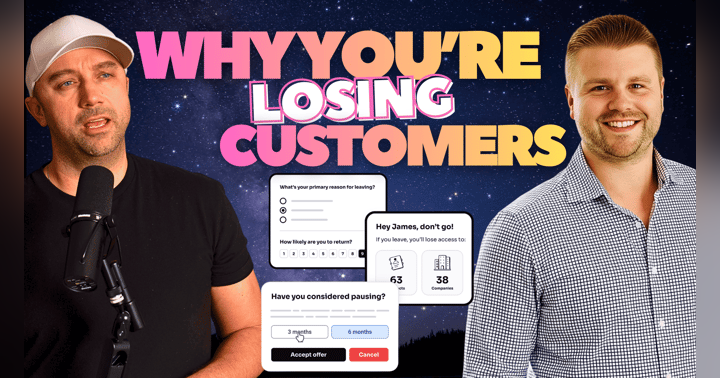
Your Shopify brand is losing subscribers that you could easily save and your cancellation page needs more help than your ads! In this Shopify podcast, I dive into cancellation flows with ProsperStack CEO Tony Sternberg and break down the tactics that consistently recover 25 to 40 percent of at-risk subscribers. If you care about retention or LTV, hit play.


Join the upcoming webinar with todays guest on December 16: https://bit.ly/stop-the-leak-dec-16
POV: Your beautifully crafted acquisition strategy is basically a leaky bucket and you’ve been pouring money into Facebook’s pockets for years.
Here’s the punchline. Up to 70 percent of customers who click cancel are not actually done with you. They’re confused, overwhelmed, or have three months of product piling up under their sink. And when you intervene properly, brands consistently save 25 to 40 percent of those would-be churned subscribers. If you care about LTV, retention, or keeping your Shopify business from quietly bleeding out, this episode is not optional.
SPECIAL WEBINAR
Don't miss our LIVE webinar with today's guest today as we go deep cancellations flows, show you exactly how to set them up, what works best, what doesn't and exactly how the best brands on Shopify set up theirs! Plus it's live, so you can ask any questions you like.
REGISTER HERE: https://bit.ly/stop-the-leak-dec-16
Key Take-aways
The cancel click is not the end. It is the beginning of the most valuable conversation in your Shopify business.
Up to 70 percent of cancellation attempts are misdiagnosed and fully preventable with the right flow.
Personalization beats blanket offers every time. One-size-fits-all cancellation flows are revenue murder.
The best Shopify brands treat cancellation as a retention engine, not a customer exit.
Skip and pause offers save more subscribers than heavy discounts and avoid training customers to game the system.
AI generated offer copy can increase save rates by up to 7 percent without changing the offer itself.
Cancellation feedback is a goldmine for fixing product, onboarding, acquisition, and CX issues.
The ProsperStack and Bold Subscriptions integration gives Shopify brands a native, no-code solution to stop churn fast.
Winback campaigns can recover a massive percentage of “not now” customers who left for temporary reasons.
You cannot fix churn if you are acquiring the wrong customer in the first place.
🫶 Support the amazing sponsors that make this show possible 🫶

Omnisend - I personally use Omnisend for every Shopify store I manage! I’ve tried them all and Omnisend is hands down the easiest way to set up email and sms automations and campaigns, leverage segmentation to personalize them, and A/B test everything to optimize conversion. The push notifications and gamified email collection tools are just the icing on the cake 🤌
(plus most report paying about half the price of Klaviyo 🤫)
🚨Listeners (YOU) get an exclusive 30% OFF for 3 MONTHS: https://shopify1percent.com/omnisend

Bold Commerce - Maximize your Shopify sales with Bold's suite of powerful apps. From AI Upselling, to powerful Subscriptions, Memberships, and VIP Pricing tools, Bold has everything you need to Maximize your Shopify revenue!
Try Bold apps for free here: https://shopify1percent.com/bold
Resources & Links Mentioned in the Show
- ProsperStack: https://prosperstack.com
- Tony Sternberg on LinkedIn: https://www.linkedin.com/in/tonysternberg/
- ProsperStack Blog on the Peak End Rule: https://prosperstack.com/blog
- Bold Subscriptions for Shopify: https://boldcommerce.com/shopify/subscriptions
- Bold Commerce Apps: https://www.boldcommerce.com/shopify
- Webinar Registration. Stop the Cancel: https://boldcommerce.com/shopify/churn-prevention
- Patrick Campbell and ProfitWell: https://www.profitwell.com
- SEMrush: https://www.semrush.com
- Charity Water: https://www.charitywater.org
SPECIAL WEBINAR:
Don't miss our LIVE webinar with today's guest today as we go deep cancellations flows, show you exactly how to set them up, what works best, what doesn't and exactly how the best brands on Shopify set up theirs! Plus it's live, so you can ask any questions you like.
REGISTER HERE: https://bit.ly/stop-the-leak-dec-16
Did you know leaving a ⭐️⭐️⭐️⭐️⭐️ review on Spotify, or Apple will give your shop gooood ecommerce karma? ❤️
Jay Myers: Welcome to another episode of Shopify 1% podcast. I'm really excited about this one today because I have one of a neighbor. We just found out before the episode we're practically neighbors just across the border. But
here's a stat that. I think in the subscription world, not a lot of people talk about, and that's that 70% of the people that click cancel. They're actually not done with your brand. They're not giving up. They're just, they're overwhelmed. They maybe have a mismatched product. Maybe they have too many, too little, they're confused.
And if you can intervene at just the right time with the right offer, the right moment, the right context, brands consistently save 25%, often much more than that of those who would normally cancel a subscription. And so today,
I've got Tony Sternberg, he's the CEO of ProsperStack, and their platform is the leading subscription cancellation management software in the world, and specifically in Shopify, they work with a lot of the largest brands to help deflect win back. Do everything to prevent cancellation and they have a native integration with Bold Subscriptions, which is how I got to know Tony really well.
And we're actually doing, a webinar December 16th, and I will make sure there's links in the show notes to the exact time. I think it's 11 Central. I'll make sure it's in the show notes where we're actually gonna show.
These cancellation flows show different examples, what works, what doesn't. So you'll get a full visual breakdown of it. So just mark that on your calendar and we'll make sure we email everyone about that as well too. But Tony, welcome to the show. But before we start, brag about yourself a little bit.
Tell us who you are and give us the lowdown on ProsperStack.
Tony Sternberg: So again, thanks for having me on, Jay. Looking forward to chatting. Retention with you, and not only today, but also on the webinar on December 16th
Jay Myers: It is the 16th.
Tony Sternberg: Yep. Alright. And but yeah again, I'm the CEO co-founder of ProsperStack. Like Jay alluded to, we work with subscription brands to help with retention, specifically at the point of cancellation and beyond, but that's our bread and butter.
I've been in the subscription world since about 2007, so fairly early in the SaaS. Landscape, if you will. I joined a startup that was an HR tech space and was with that for about 12 years and did everything along the way and whether it was, customer support or QA testing into, got into product and operations and, we ended up, growing and exiting that company in about 2020.
And I was what's the next step in what I'm gonna do? What problems have I seen along the way? And, that's where this kind of retention thing married it into and hit home. And myself and my co-founder, had this idea that, hey, there's a lot of high volume, very transactional kind of subscription brands that acquire customers, in an automated way.
And when you have that sort of model, which is a great model you tend to lose that understanding of your customers, that one-to-one relationship. And It's really difficult to fully understand why people might leave you, right? We wanted to create a platform that specifically initially tackled active churn.
So cancellation flows, and ultimately, try to prevent those cancellations at the point of churn. And our light bulb moment creating it was like, we need to be really married to the subscription platforms like Bold and integrate very tightly to what they're doing so that we can create a low-code, no-code solution for our customers.
That will automatically, you know, affect the subscriptions, through the Bold APIs. So that's really how our idea, came, through is just seeing a problem in our own subscription business and wanting to do something about it and help brands just like ours at the time going forward.
So that's really how I got here today.
Jay Myers: So just before we get into it, what exactly does ProsperStack do?
Tony Sternberg: Sure. Yeah. So at the point of cancellation, so if someone's a subscriber to your brand and they go to their account management page and they click that cancel button, that's where ProsperStack's gonna take over. And we're gonna leverage, all the first party data in your subscription platform and any other data you wanna.
Share with us, about your customers so that we can properly, segment them and really customize the journey for them and present an offer that's taking all those data points that create their segment and marrying that with the feedback they're giving you to make sure that we can give them an alternative to cancellation that actually makes sense, right?
And there's a lot of reasons why people cancel, but that's really where we're coming into play and what we're trying to do at ProsperStack.
Jay Myers: So then depending on what they select, it's I have too much, it's too expensive. I don't need it anymore. I no longer use the product or whatever it is. You have a different flow based off of that. Offering a discount, offering a product swap, offering a skip a month, or that kind of a thing.
Tony Sternberg: Exactly. Yep. That's exactly right. So just, yeah different reasons based on, different feedback given, and also going back to those kind of data points, being the customer profile as well. Yep.
Jay Myers: So many brands talk about acquiring more customers. They're spending so much money on the front end, millions of dollars on Facebook ads and doing everything they can to acquire customer, but they don't obsess over the cancellation part maybe as much as they should. Even though.
I think you've said it's probably one of the biggest levers you can pull. Why? Why do you think it gets maybe overlooked sometimes?
Tony Sternberg: And I think it's really in the last 10 years in the subscription world that people started to really pay attention to churn and retention and all those things. And think for all of us that were around, in the mid two thousands in the SaaS world, like the word customer success didn't exist, right?
Everyone was focused on acquisition and maybe rightfully so because it was cheap. But the problem is over that time, there's a lot more competition. It's very easy to spin up a SaaS product or a subscription business. And throughout that time, with the competition and the rising costs of ad spend, what whatnot, your CAC costs are way up and it's just becoming like an inflection point where once you acquire so many customers, it actually is just far more cost effective to retain them.
And, the truth is I think people focus on acquisition so long that maybe that inflection point can sneak up on them and then really take over where turn becomes a huge problem. But the good news is there's solutions you can plug and play and really fight it. And there's no way ma magic, silver bullet or anything, there's different ways you can go at it and it's something that definitely needs to be paid attention to.
But I think more and more people are realizing that it is something they have to focus on earlier in their company lifecycle.
Jay Myers: What kind of results do you see? And I know you said minimum, 25% was table stakes . What's like some of the high end results that you've seen?
Tony Sternberg: I mean There, there's certainly some variance in like your profile end user, what you're selling, the quality of what you're selling, all that stuff. But yeah on the, I think like on a baseline, if you're really doing nothing and you plug in a solution that is at least dynamic and can speak to, the reasons why they're leaving, I think, 20% is a good baseline, but we've seen results that are in like the low forties on some of our customers.
So literally, if a hundred people. Go to try to cancel, we're saving 40 some of them from doing it, which is, just a huge needle mover to the bottom line underlying metrics of subscription business since it's all based off of, CAC and LTV essentially.
Jay Myers: To me it's like acquiring 20 to 40% new customers. Really, like if they were gonna cancel, it's the same thing. There's no difference of saying what if I could come into your brand and boost your signups by 20 to 40%? People would say there's no way or like maybe one or 2%, but this is essentially the same thing and arguably maybe even better because there's a lot of data that shows when you have an interaction with a brand and if something goes wrong or you like that they actually stay around longer. What we know with our subscription app that customers who modify a subscription or update it in some way,
Tony Sternberg: Sure.
Jay Myers: This was a while ago, but it was between 400 and 600% higher.
LTV. So meaning they stay around four to six times longer. And I think the reason is that once you modify a subscription, you skip a month or you pause it for a little bit, you don't panic. The next time when you have too many or too little, like your brain doesn't go to, oh shoot, I gotta cancel the subscription right away.
'cause you've worked with it you've modified it. Now you're like, your guard is down. So I'm willing to bet. Have you ever actually checked, I don't know, if do customers, after they're prevented from canceling, are they more valuable than customers who didn't cancel in the first place and just ended up canceling?
Like my hunch is they might be.
Tony Sternberg: Yeah there's a couple ways you could probably look at it. You could look at it almost like a new lease on the subscription, like almost starting over. But a lot of times, I talk about it in, in different areas, at every subscription model, like churn is, it's just like waiting to happen, right?
Jay Myers: It's inevitable.
Tony Sternberg: Yeah. It's inevitable. There's a finite amount of time they're gonna be there. And a lot of times when you're preventing a cancellation, like they might, it might be a, an event that triggered it that's premature in their expected, lifetime value.
But it also can result in like a new fresh start as well. So we've seen it in some cases where. Yeah. On average, you know, we're three to six months probably post save. I think that's a fair spot to be, but depending on your model, if you're annual subscription based or quarterly or monthly, like that can result in, over year or more.
So we work with, all sorts of different apps and direct to consumer type stuff. but it is really unique to look at that data and see those different changes and results as a result of saving the cancellation and how long they stick around.
Jay Myers: You've said in the past, I've heard you say that most cancel clicks are actually misdiagnosed. They're not necessarily like. The customer doesn't actually want to cancel. In their head, they're doing something else. What is the real root cause of churn across subscription brands?
And then what do they get wrong? When they in, when they look at their cancellation numbers and they're interpreting that.
Tony Sternberg: Yeah. I think it is, when you think about it from like a consumer perspectivewhen you decide to subscribe or choose a brand. You wanna say, I made the right choice. Like it's your choice, you own it, right? So nobody wants to admit they're wrong.
So I think cancellation is always a last resort. There's always some sort of underlying problem, and it's not necessarily that they want to cancel, but they might see it as their only way out at that time to solve that particular problem. what we see. Is that, a lot of the cancellations that come in are really just due to solvable issues.
It might be that your delivery schedule or cadence is too frequent and that the product's piling up. And it doesn't mean that they don't like your product, they don't want your product. They're like, I'm just getting overwhelmed. It might be that, the variant of the product is incorrect, so it could.
Flavor, size of it, whatever the case might be. Or it could be like a temporary monetary issue where Hey, this month's a little tight. I need to, back off. But I really would love to kinda keep this around at some point. So just being important to give the proper, responses to those particular reasons can just quite easily save the subscription.
And, as we know, the hardest thing you can get someone to do is go put that credit card in and buy it again. So like, do everything you can to not make that customer do it right. So just, give them the proper alternative and you'll be in good shape.
Jay Myers: I was listening to, Patrick Campbell
Tony Sternberg: Yes. Yeah for sure.
Jay Myers: um, Yeah. He was on stage at SubSummit and he was talking about, they had a study that. People who canceled subscriptions and he does a lot in the SaaS space, like software subscriptions, but also a little bit on the product side.
But essentially it was like 37% of them were reactivated within, I think it was six months at some point. And the learning from it was when people cancel a subscription, it doesn't mean I hate your product and I never want your subscription.
It's, they're just too lazy to figure out how to pause it or how to adjust it, adjust frequency. So what they do is they just in their head, just think, oh, I'll cancel it and I'll just resubscribe when I need it again. I think I've been probably been guilty of that as well too.
Tony Sternberg: Oh, same here.
Jay Myers: But if you can intervene and present a management option. Like how about a pause for three months? Or how about a skip a month? Or maybe it's the product. They wanted a different flavor in six months when they resubscribed. do you have any sense of what is the percentage of customers that when they click cancel, you're never getting them back?
Like they just, they do not want it, but there's got, there's like a segment that. They're really trying to do one of those other things, like it's not that they hate your product and subscription, it's just this is how they're managing it.
Tony Sternberg: Yeah I agree with that sentiment. I think I've seen statistics out there that say, far too often people ignore past customers as a means to acquire new or reacquire them.
So true. I've seen statistics that say you have a 60 to 70% chance to have someone purchase from you again, that has previously done business with you versus.
Somewhere between a five and 20% chance for a new prospect to actually purchase, which just, speaks volumes to me and the importance of, using your past customers as a channel to, reacquire them. Because like you said, they're not canceling because they're saying, I'm done forever.
They're saying, not right now. And sometimes you have to be reminded, sometimes you have to be nudged, sometimes you have to be incentivized, and then you can come back and feel great about it and you're happy again. Yeah, a hundred percent. There's just a huge untapped. Kind of list of people here that a lot of brands aren't going after.
Jay Myers: I wanna talk a little bit about what does a great subscription cancellation flow look like? if you're in the CPG space, let's say you're selling some. Supplements or some nutrition product or something along those lines, like some consumable.
What do you see the best brands doing? What's a great subscription cancellation flow look like?
Tony Sternberg: Yeah I think there's definitely a handful of components to that. So I think, first and foremost it needs to look professional. It needs to look like your brand. So you wanna a really branded, designed. Friendly on desktop, tablet, mobile, you name it.
Responsive type cancellation flow. So you want that structure set up first and foremost. You want to have a list of, a handful of compiled, pre-compiled reasons why people might leave you. And that's gonna be based on, the data that you observed on your own. But that's a dynamic list.
A lot of times when we start working with people, they're like, oh, I know exactly why my customers cancel. Here's the four main reasons, let's put 'em in there. And we're like let's put another reason in there just to see what people start putting in. All of a sudden you look at the data two, three months down the line and you're like, let's look at all those others.
Oh there's a pattern here of this new reason that's emerging, so let's get that onto our standardized list and then try to learn, dig in more about it. Having that pre-compiled list of cancellation region so that we can react to them properly. And then really personalization throughout the process.
Of course, bringing in things like name all that good stuff is great, but there's even ways to bring in, like KPIs or just really unique statistics about your customers. So if you've got a product that's beneficial for hair growth or supplement or something like how many shipments have they received, how many, pills, does that equate to how many what is like the tangible benefits that they've experienced, for those and bring that to the forefront in the cancellation process and reiterate the value so that.
A lot of times you don't even have to concede revenue to keep people or delay products. You can just simply reinforce the value you've given and they're like, you know what I don't want to give this up because I am seeing benefit from it. And we've seen that happen a ton too.
Jay Myers: yeah, I could see you could do something really creative where if you, I don't know, pick any product. it could be toothpaste, but like you, are you sure you wanna cancel? You've saved if they've had 50 shipments or whatever you've saved. 17 hours in ordering, unboxing and whatever, like of managing your toothpaste or you've saved this much amount by being on a subscription, or your teeth have benefited this much from this product, or, yeah.
And, but you also have A/B testing, so like, I think that's probably the ultimate route, right? What we think might be the best offer. Who knows until you actually A/B test it,
Tony Sternberg: yeah. So then I was definitely gonna say the third kind of component, or it would be like the fourth I guess, but whatever number we're on is definitely gonna be some sort of testing protocol within there, because like you said okay, yeah, we're willing to, incentivize in the short term someone to stick around.
So let's give them 30% off for the next two ship. Great. That sounds cool, but how do we know that's the best offer for you, right? How do we know that's gonna work for your customer? So we need to be testing that versus 40% off, 50% off, 15% off. It doesn't really matter up and down. And then also for different durations.
A lot of times we get people that come in and they say, Tony, our cancellation flow that we built ourselves, it's performing great. We're saving, 55% of people that, that try to cancel. And I'm like, wow, what are you what offers are you doing? We just give everyone an offer that's 80% off for the next six months.
And I'm like all you're doing is giving revenue away. I think you need to start thinking about optimizing for revenue versus optimizing for purely save rate and that, because I think brands are just leaving far too much on the table and you need to really test your way to figure out what's that right mix.
Maybe it's that 35% off. For four months is gonna be like that perfect mix of you retaining, enough lifetime value of the customer for making it worthwhile while not conceding, your 80% off for six months just because you want yours rate number to look higher.
Jay Myers: I also think if you do too big of a offer like that, people will start to game it. Like I, there's a lot of people that they just go in their audible account, click cancel to get the three months free. Probably listeners are gonna go do that right now if they, there's a,
Tony Sternberg: Brands we work with that monitor Reddit are concerned about gamification. And I think if you train your customers for really giant discounts, they're going to expect that, especially on the acquisition side too. And you see it in different industries. A lot of times it could be like, signing up for the New York Times or the Athletic and you're getting 90% off for the first year.
You paid 12 bucks the first year and now you're gonna go up to $150 and you're oh, that, that doesn't seem right. I just paid $12. Even though it's probably worth it. You can also set a bad training precedent to your customers too. But, platforms like, ProsperStack that are tied in with Bold, we do have anti gamification stuff built in too.
So like you can control whether people can go and claim the same offer multiple times or get a different offer based on the previous one they claimed. You can really fine tune it. Those are all things that you definitely have to consider when creating a cancellation flow in today's day and age.
Jay Myers: Yeah, and talk to me about the AI components of the offer so you can let it figure it out as well.
Tony Sternberg: In the sense of, you wanna test your offers to figure out is, 30% better than 40%, better than 50%, right? So we have that AB testing component, but we also have an AI component that is going to be able to. Not only generate the offers and the copy of them for you. So what's really interesting is we've seen like up to 7% difference in, in take rates on the same exact offer, with the same exact parameters, just varying how you present the copy and your CTAs.
And we've done that through rounds and rounds of testing. But our, our, we call it autopilot, but autopilot essentially will take, your offer and then run it through dozens, hundreds of iterations to optimize that copy and get it to a point where, cool, we were getting a 18% take rate on this offer at its base form.
Now we've got up to 23%. Those are the kind of optimizations that we're looking for, especially when it comes to high volume subscription brands. 'Cause small movements can really move the needle quite a bit. Yeah.
Jay Myers: Huge.
Jay Myers: What is the most effective offer, like between skips, discounts, product swaps, downgrades, different products? If you had to pick one, and I know you, and the beauty of ProsperStack is, I know you can do all of them based off of why they're canceling, but what's the most effective if you had to choose one?
Tony Sternberg: Yeah, so I would say by industry it can vary on the e-comm DTC side, probably like skipping, rescheduling, and I kind of lumped them into one. But um, yeah, skipping or rescheduling is just as a result of having that physical product or too much of it, or just need, or maybe I'm going on vacation, I don't need it right now.
They don't want to cancel, but they're just willing to delay that. But as a blanket hole across all of subscription, probably discounts we'll move the deal the most, but on DTC specifically, we find that like skips and pauses are pretty, pretty common.
Jay Myers: And then there's the whole other side to cancellation where there's gonna be a percentage of customers you can never save. Talk to me about how brands are using ProsperStack for that and what some of the strategies are there.
Tony Sternberg: I think that's definitely a benefit of a platform like we provide is, on the flip side, post cancellation, you've got this treasure trove of data and it's not usually until, it's it tends to be an afterthought for a lot of people we start talking to. But then once they've got that data collected and they've been running it for months or years, and they're.
We wanna go look at this and see what the heck we're seeing. And I've heard it used in all sorts of neat ways internally. We've had people that, pipe it into their BI tool and kind of make it part of that. We've had customers tell us that, you know, hey we, we do a weekly all hands meeting and every week I print out this specific report from ProsperStack.
And that's something we go over with C-Suite and so people are taking it seriously? They are. They are. Seeing the importance of the data that we're doing. But there's just all kinds of neat stuff that you can pull up from it and break it down by, cohort of your customer. If you have multiple flows because you have multiple products or whatever the case might be, you can, filter it down by that way and then by date range and compare it to previous periods.
So you're looking at trend data. How are we trending on churn this year versus last year? Okay, we're seeing a spike and you can now correlate. Spike and drill down and look at those subscribers that are churning. And we've had people tell us too you've helped us surface acquisition problems through churn.
So we saw an uptick in churn. We dug into it and we realized that we're acquiring all these customers from this new channel that are churning at twice a high rate as previous before, which throws kind of all their acquisition metrics outta whack. But it also showed them that there was a problem there, and they have to either figure out how to acquire them cheaper through that channel or maybe abandon that channel altogether
Jay Myers: Yeah, I often say that it's the biggest. Churn challenge brands have is actually acquisition the churn is just, it's more like the, that's the result, that's the indicator. It's like we, you don't, when they say, we have a churn problem, no, you don't have a churn problem. That's just what happens when you have bad acquisition, bad onboarding bad product education, bad ways for customers to manage and interact with subscription like, and then it just ends up in churn.
Tony Sternberg: Yep. No I agree a hundred percent. if you acquire people and didn't educate them properly they just could be bad fit customers from the onset. And a lot of times we deal with brands that are like, Tony like, if we can get them past the three month mark, we know that they're gonna be here for a year and a half, or something like that.
So a lot of times they'll be hyper aggressive early on, but then I always warn them. I'm like if they want to turn early, it's probably it could be like a channel problem, or it could be like an education or onboarding problem and just because you're band-aiding it with this to get 'em to like another two months, make sure you're going back and fixing that underlying problem.
'cause all we're like, we're not saying again, what, we're a bandaid, magical fix for everything, but we want to surface. That you can address in other areas of the customer lifecycle that just happen to result in cancellations, right?
Jay Myers: Churn I often say is it's a formula of when perceived value is less than cost. an example I often use is Netflix. There is arguably billions of dollars of value in Netflix. If you added up every movie in there, and if the average movie's $20 or $30 and you, if you were to buy everything that's available in Netflix, there's probably a billion dollars worth of content there.
Tony Sternberg: Yep.
Jay Myers: But I don't know what a subscription is now, $15 a month or something. But there's some people that they don't pay $15 a month even though there's a billion dollars worth of value because the perceived value is still less. And the reason why they don't perceive the value is maybe they don't watch Netflix for two months.
And if you don't watch it, you start to think, "ah, there's nothing there for me". We always work with brands from the second when they subscribe, you don't really actually even have a subscriber yet. I always say, you have a lead and it's your job to educate them and turn them into a customer.
'cause usually the mindset when someone's buying a subscription is. Okay, I'll try it. They probably went to buy it one time, but then they saw the subscribe and save for 20% off, and they probably thought, okay, I'll click subscribe and if I don't like it, I'll just cancel after the first month. And I saved 20% of my order.
That's how customers are thinking I've done it. So they're not really a customer yet, so we think. I, how many new subscribers did we get today? And if a hundred people signed up, you should say we got zero. We got a hundred one-time orders that we haven't actually turned into a subscriber yet.
But now our job is to educate them about the product, our company and there's a brand that, they're a subscription brand, there's actually a charity charity Water And I donate on a recurring amount, I remember when I signed up for the donation, you go on their website and they talk about all the water wells, they're building everywhere and they're providing clean water to millions of people.
And you're like, okay, yes, this is a good cause. I'm gonna contribute $50 a month. You go through checkout and then. On the thank you page is a video from the founder saying, thank you so much for your donation. Your money helps build these wells and provide clean water from millions of people.
And you're thinking I know that's why I just bought it. I just went through all your material. but what they know is they have to continually educate. People on the, what they're doing in the world. If I don't get email updates about new wells being built, after three or four months, I'll probably cancel my donation.
'cause I go, ah, is there any impact happening? But if I get email updates showing how many people got clean water, how many wells were built, I'll keep it forever, right? From the second someone subscribes, there's this half life of excitement from when they click the subscribe button and they click order from then to when they get the product.
You could probably email them three or four times that first day, like the second they get it two hours later and keep educating on it. But this all goes down to we could do whole ups on that, but I know that's not the focus of this one. But I think just for those listening, cancellation management is critical.
Like we have seen the massive impact it's made for brands. It's not the root of the problem though, right? That's the, but you absolutely have to have it. So on the gathering of information, learning about it, is it open-ended field? Is it pre-selected questions? Is it like, what does that look like?
What's the extent of what brands can gather?
Tony Sternberg: We always recommend starting with your standard list of cancellation regions, and then from there branching out. So, a lot of times it could be like, hey, I didn't the taste, I didn't like the product. I didn't like, it didn't work for me.
based on those responses, then you can conditionally branch out and say, okay, you selected this. I'd love to learn more if you don't mind. And that could be done through trying to get a one, one conversation. It could be done through an open-ended field, when you have a lot of cancellations, it's also hard to see all those individual data points or whatever.
What we actually try to do and what it's not. What we try to do, what we do for people is we actually run all, all open and feedback through like language processing and we surface common words and phrases that we keep continually see so that you can run reports on an interval. Because if you've got, let's be honest, if you've got 5,000, even 500 cancellations a month, like how are you gonna sift through all that feedback all the time?
We try to sift like kind of the noise and get the important stuff up to the top and let you see snapshots of that, and then drill into okay, which customer was that, or which customers had said that, and what's their common kind of overlapping thing? Yeah, you can do a lot with the feedback you capture within there.
And it can be all conditional and it could be open-ended, but it's really about having in a usable spot after the cancellation too.
Jay Myers: Yeah. So I could make it just one open-ended question with a field that's open-ended. Okay. That's what I would do.
Every time I click those, I just, I pick the first one or I pick something. 'cause I'm just, I wanna get through it. And I think the metric, if you we get a lot of results like in a, but that's the wrong metric. I'd rather have fewer results, but quality data
Tony Sternberg: Yep.
Jay Myers: versus if I said, yeah, 80% of the people that uninstall an app give feedback.
But it's not valuable. I'd rather have 10% who care enough to type something like they were that frustrated that they'll actually type something. But it's always been the challenge of then how do you parse all that? But actually now with ai, that's
Tony Sternberg: it makes it so much easier to summarize and, bring up the important stuff than really reading through all the noise. But and part of it goes into what's mandatory versus optional too. And, if you make every field mandatory, you're gonna get garbage in there.
And if you make it optional I tend to agree with you and say. The ones that are more intentional about the feedback they want to give or something happened that wasn't great and they really wanna kind of vent or whatever the case might be. Like, they're gonna be the ones that are typing in there.
And that's quite honestly the feedback you need to see, not someone saying NA or I'm typing here because I can't proceed if I don't type thing right?
Jay Myers: Yeah and it's just. Be thankful for that feedback too, because if someone takes the time to give that it's like gold. Learn from it. Like that brand that you talked about that reads it out. What are some things that brands get wrong with cancellation flows?
Some things to avoid or like.
Tony Sternberg: Yeah, so I think there's definitely a lot, and I think a lot of them are fixed just through some of the principles we talked about earlier. But, um a lot of times we come in and people are just doing blanket offers one size fits all. So you know, hey, everyone's gonna get this same offer and we're not gonna really care about anything else.
But by using customized flows and segmenting your customers and reacting to the feedback they're giving you, like you're solving that problem inherently. I think like the more blanket one size fits all style is really just the big no-no, I think in today's day and age.
And that's what a lot of times with a homegrown solution, which is, great, it probably looks great and it functioned for that particular reason you wanted to, but then it gets abandoned because there's, other priorities and whatever and just ages there in place versus being able to something that you can easily update and change and react to new products that you've released, new changes in the market dynamics.
Maybe the economy's not doing as well. You need to change things up quickly. That kind of stuff. But yeah, I would say, more of a blanket, one size fits all approach is the biggest problem I see from a day-to-day basis with cancellation flows.
Jay Myers: Makes sense and prosperous stack does Winbacks as well too, right?
Tony Sternberg: We do, yeah. So
Jay Myers: this is a separate, actually, we haven't talked about this all, so can you explain that?
Tony Sternberg: yeah, so what we do is we have automations that are able to be set up and we call 'em, winback campaign. Which is basically going to try to re-engage a customer that has gone through with a finalized cancellation. And a lot of times that can be done many different ways, but like you could reach out to them prior to that, if they've prepaid through a certain period, you could reach out prior to that period ending and trying to reactivate them with incentives.
But it gives us a way to deliver, kind of use that same engine we built in the cancellation flow area, where you can segment your customers and use a trigger based event and then send them. An offer that ties into, Bold in this case and automatically delivers that offer to email. They click that link and it goes and checks them out and automaticallyrestarts their subscription.
Right? And that can be done with, a free product. It could be done with a discount incentive, whatever the case might be. or it could be done, after the subscription's over maybe. 30, 60, 90 days post cancellation. You wanna say, Hey, we're still here. Is there a need for this product?
Here's a quick little incentive to come back and give us another try.
Jay Myers: Yeah I love, I get some very compelling win back campaigns from brands. If I can actually I did cancel my green subscription because I thought it's just easier if I ordered it 'cause I couldn't get the timing right. And then after. Three months or four months or something. I got an e email.
It was something like, ready to get back on the healthy train. The first months on us. I'm like, heck yeah. I'm gonna
Tony Sternberg: Yeah, I'm taking that for sure. And you're probably still subscribing. Yeah.
Jay Myers: Yeah. And any data on how those wind backs work? What kind of conversion? Brand see?.
Tony Sternberg: Yeah. Great question. 60 to 70% is your probability to selling to a past one. So as long as you're doing, periodic drips to your past subscriber base I think there's no reason why you're not hitting 40 to 50% claim at some point along the um, you know, might not be on that first take or that first email, but, marketing to your past customers, I think you're like you have cancellation flow.
We can capture 40%. 60% get through that. There's a good chunk of that 60% that is got through that can also be won back into a customer again and that's how I look at it for sure.
Jay Myers: Just knowing that they don't not want your, subscription. They just don't want it right now. And that's the reason why a lot of people cancel. So if you are good to them during the cancellation process and not making it hard to cancel, I actually just, I couldn't believe it the other day.
I canceled. Something and I had to at this, it still happens. I had to email it was actually SEMrush, is like a tool for SEO and I couldn't, we use it too. And I had a separate account just playing around with, they have a tool called Exploding Topics
Tony Sternberg: Okay.
Jay Myers: which is really neat. I actually, I'm a fan of the tool and I don't mind giving a shout on the program.
It's like you can track trends and see what. the next trend is gonna be for certain things, right? And so I signed up for a 14 day trial put in my credit card information and everything. anyways I didn't have time to really dive into it, so I wanted to cancel it and I'll play around with it later.
So I went to cancel and I couldn't find a cancel button anywhere. And I finally clicked on the billing thing, and it's to cancel it, I had to email. So then I emailed. I got an automated email and said, we've created a ticket. And so I waited a day, a day later, no reply, and then three days later, I guess my trial had run up and then I got a charge from the company and said, here your receipt for $49.
And I was like, this is so a, I don't have the time to be emailing to check on this email. And I just emailed them back and I was like, look, if this doesn't get refunded within four hours, I'll dispute this charge. I'm gonna give you the benefit of the doubt and let you correct this.
And they emailed back within about seven minutes. but now if they send me an email in three months and say, Hey, would you like to give it a try again? For exploding topics, I would say no because of the experience I had. But had that been a better experience I would've.
Tony Sternberg: I think it's so interesting you brought this idea up because there's actually a name for this. We've blogged about this before, but there's this concept called a peak end rule where. it's like a psychological thing that people, so us consumers, we disproportionately remember brands and our experiences with them at the very peak of our experience, but also at the end.
And the end, meaning the cancellation and where they dropped the ball. I mean, We're almost in 2026 here and legalities, you know, legal advice aside you, you pretty much have to, if you're allowing for online signup, you pretty much have to allow for online cancellation. There's loopholes where you can email, but that who wants to do that?
That's not consumer friendly anymore. But if you have that end experience and poorly, like you just said, now you're hesitant to resubscribe to them, recommend 'em to other people because that end experience is now disproportionately affecting, regardless of if that product and those topics or whatever were like, man, he's hit it outta the product.
But now you're like spoiled by this last experience you had and I think it's such a fascinating, psychological thing. And it is totally true and I've so many people have talked about it before I've experienced it and I think it just makes total sense when you hear about it from other people.
Jay Myers: So you've blogged about that. I'll put a link to that in the show notes. That sounds super interesting.
Tony Sternberg: I can, throw you a link to notes.
Jay Myers: Anyone can be nice to someone when you're meeting them and courting them and wooing them, but it takes a real person to be nice as you're ending a relationship, right?
Like, how many times have you salesperson, like nicest person in the world, but then when you say no, all of a sudden you see another side of them.
Tony Sternberg: Oh man, I could probably, I don't, yeah, I'm probably, I'll share this story another time, but I had a really poor experience just like that with a product that we were evaluating to buy the other day, and once they found out. I won't name names, but once they found out we weren't gonna buy, they basically said why are we on this call?
Why are we wasting, why are you wasting our time?
Jay Myers: There goes any chance of
Tony Sternberg: I'll never, ever recommend you or buy from you ever again.
Jay Myers: Geez. Unbelievable. Yeah, I've had similar experiences.
Tony Sternberg: Yep.
Jay Myers: Yeah. Okay, let's give a real quick before we run outta time here. I mentioned at the beginning of the show, but just in case anyone missed it, we are hosting a webinar. We're gonna dive deep into cancellation flows.
We're gonna show them up on the screen, how to set them up, the AB testing, everything. If you are listening to this and you wanna learn about. How cancellation flows work. There's gonna be a link in the show notes register. It's free, it doesn't cost anything. And even if you can't make it still sign up 'cause then we'll send you the recording.
And I, a lot of people listening do use Bold Subscriptions and so I, this is not to promote Bold at all. I'm very usually black and white about that. I, this is, but I'm gonna say it here because this is very specific to this and I'm excited about this, that ProsperStack and Bold Subscriptions have a native connection where if you're using Bold Subscriptions, you can now turn on ProsperStack and have the best cancellation flows, I think out there! I don't, I you're the market leader as far as I'm concerned
Tony Sternberg: Yeah, we like to think so.
Jay Myers: Yeah. anything else you'd wanna say about that or any last things you wanna say to the listeners?
Tony Sternberg: I think for sure. I think if that, it all sounds interesting to you, like we'd love to, dive further into this space and explore it on the webinar on December 16th. And we're equally as excited about like this partnership with Bold, it's like taking it to another level with a subscription platform like yourselves.
I just think you guys are really forward thinking on the importance of retention and wanting to have a top tier solution in the hands of your customers. It's only gonna benefit them, it's only gonna make their business healthier. And in turn, when that happens, like we're all benefiting, right?
Definitely excited to see what the future holds with our partnership and helping other brands, with their retention needs as well.
Jay Myers: Awesome. Tony, where can people find you? It's the website. And then what social, any social platforms you're active on.
Tony Sternberg: Yeah, absolutely. So you'll find us ProsperStack@prosperstack.com. I, myself am pretty active on LinkedIn, so I talk a lot about retention, a lot about these ideas. Concepts like peak end rules and riff about that from time to time. You can find us, find me on LinkedIn at Tony Sternberg as well.
And yeah, we'd love to interact with you there.
Jay Myers: Awesome. Tony. This has been a ton of fun. I'm looking forward to December 16th and hopefully see some of our listeners. And hey, listen, if you're listening to this podcast, you can ask questions during the webinar. You can ask questions during the podcast. You're probably at the gym or in the car right now.
But join a podcast and you can ask Tony any question you want 'cause maybe I didn't ask the question you wanted me to ask him today, but you'll be able to during that webinar on 16th. So make sure you sign up for that. Tony, thank you so much.
Tony Sternberg: Appreciate it, Jay. It's a blast today. Looking forward to it.

Co-Founder & CEO
The first 12 years of my professional life were spent in the SaaS world at CATS, a bootstrapped startup in the HR Tech space, where I joined as one of the first employees. There, I played key customer-facing, product and operational roles, helping grow revenues from the low thousands to $6M while acting as President prior to the company being sold.
As our company began to scale and mature, we realized how little we know about why our customers would churn. We knew there was room to learn from those cancellations and even give them opportunities to stay.
So, my co-worker (turned co-founder) and I decided to build on this solution ourselves. We integrate tightly with billing platforms (like Stripe) to act as an automated retention department that 1) provides an offboarding experience tailored to different segments of customers, 2) collects feedback from them, 3) presents targeted offers and incentives for them to stay at the point of cancellation, and 4) combines that data to show meaningful churn metrics. We call it ProsperStack.
Here's what our clients are seeing:
+ Reduced churn (up to 40%)
+ Increased LTV
+ Actionable insights that can be used by product, marketing and others
Interested in retaining more customers, immediately? Request a demo at:
https://prosperstack.com/